Last updated November 21, 2026
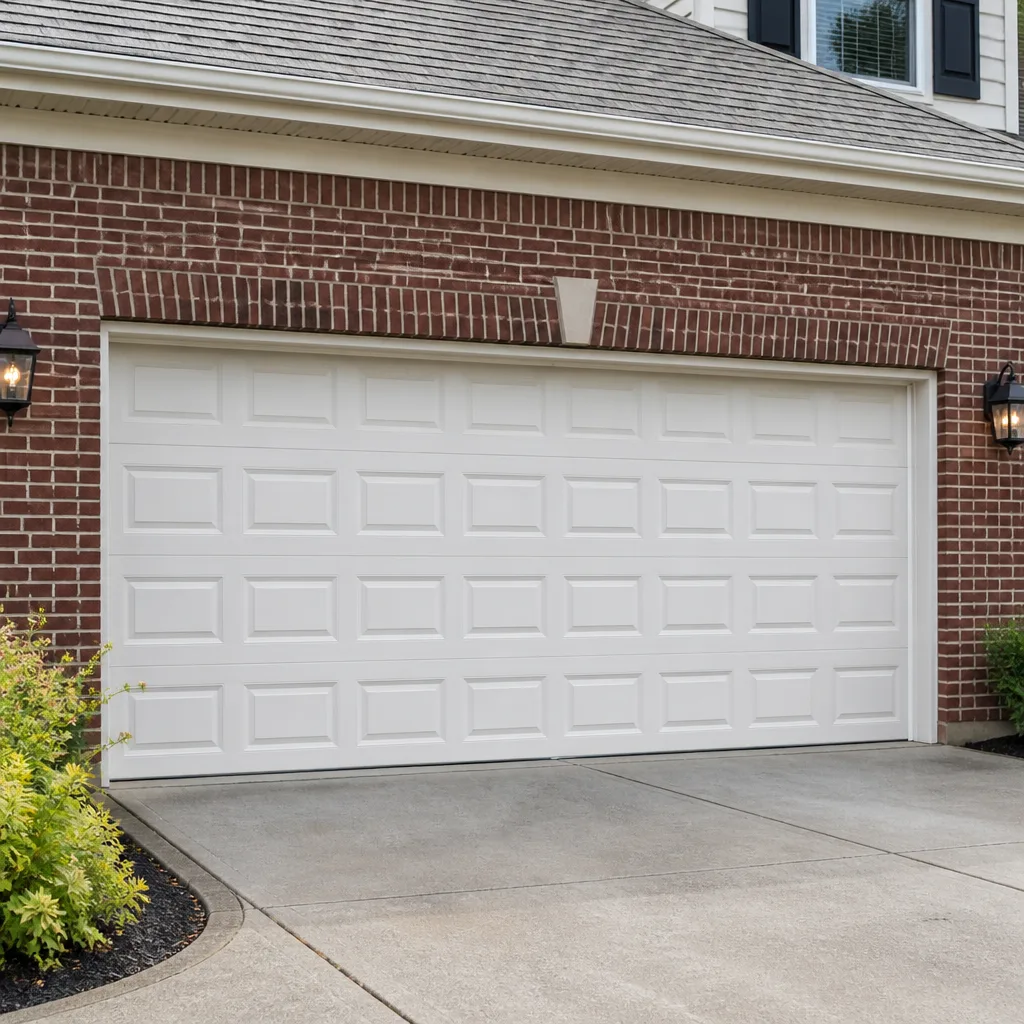 Raised-panel steel
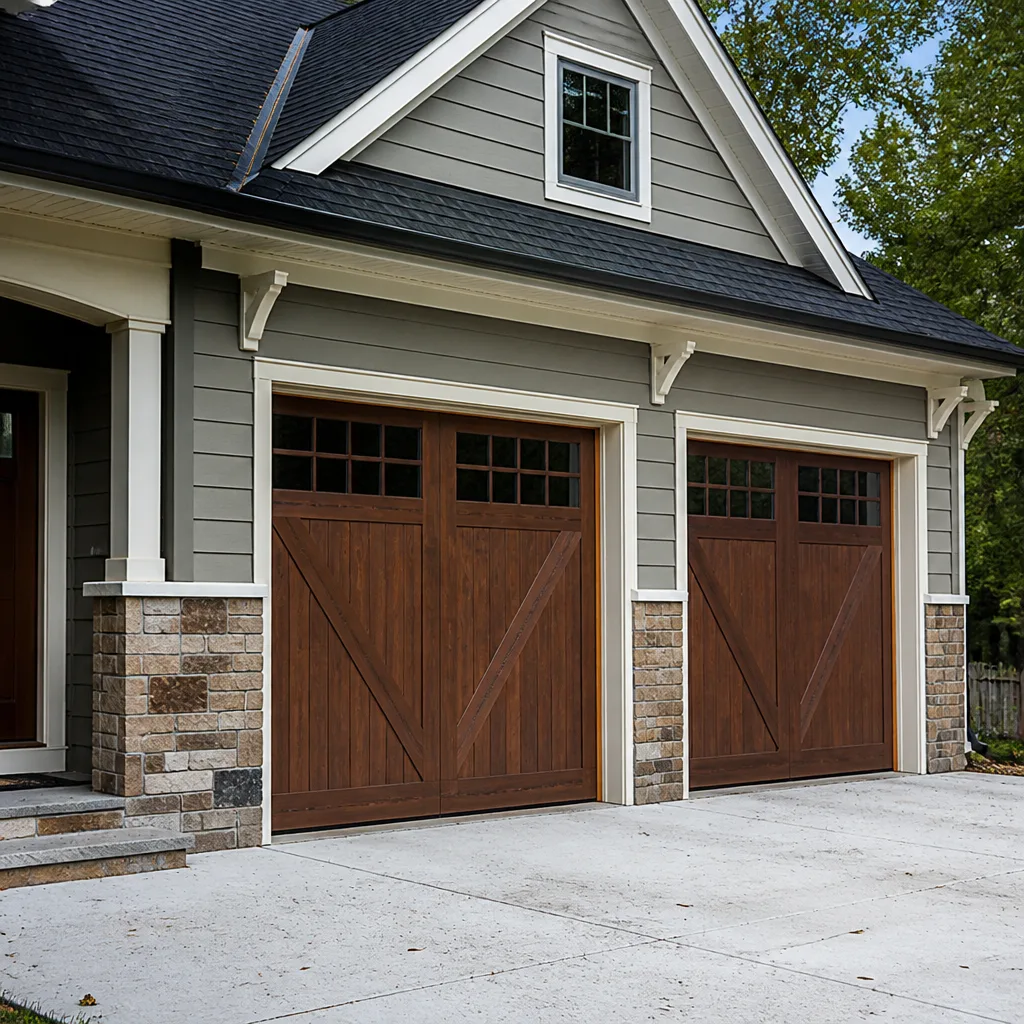 Carriage house
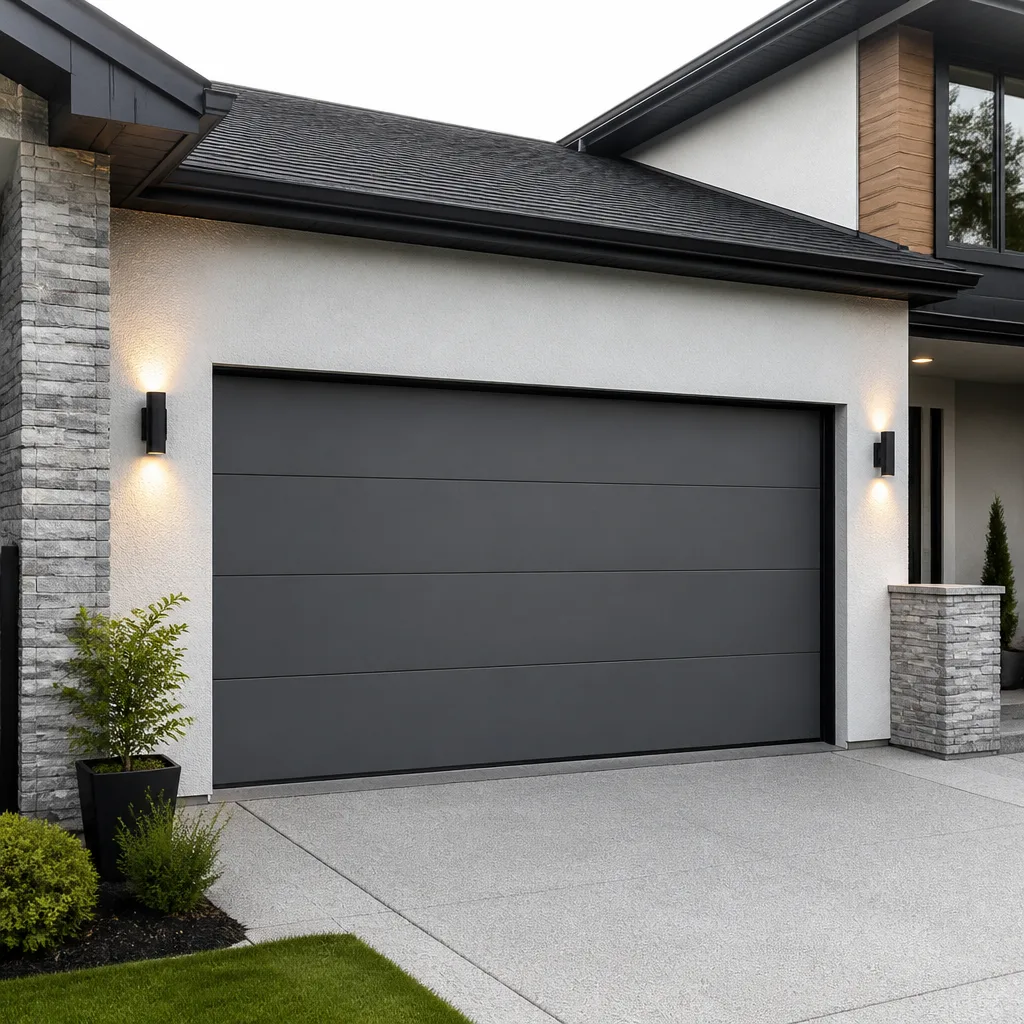 Modern flush
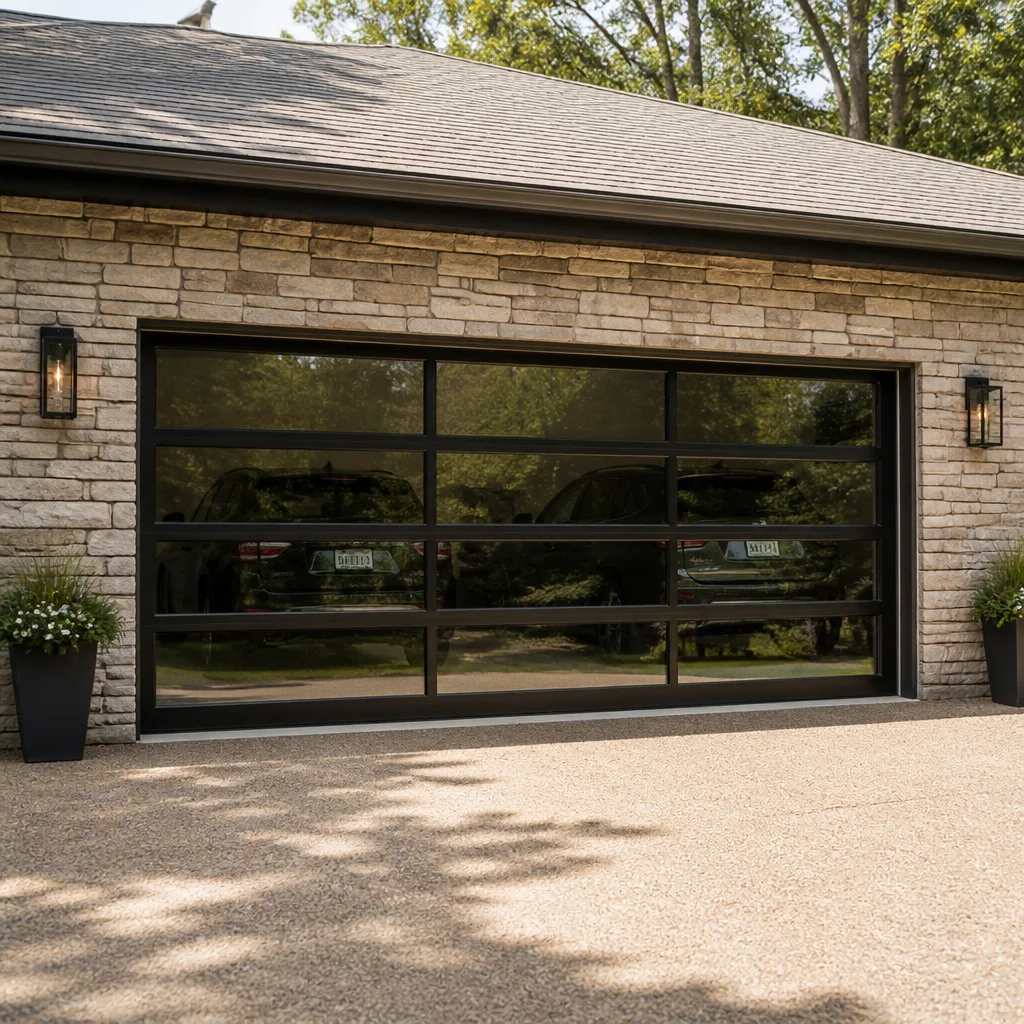 Full-view glass
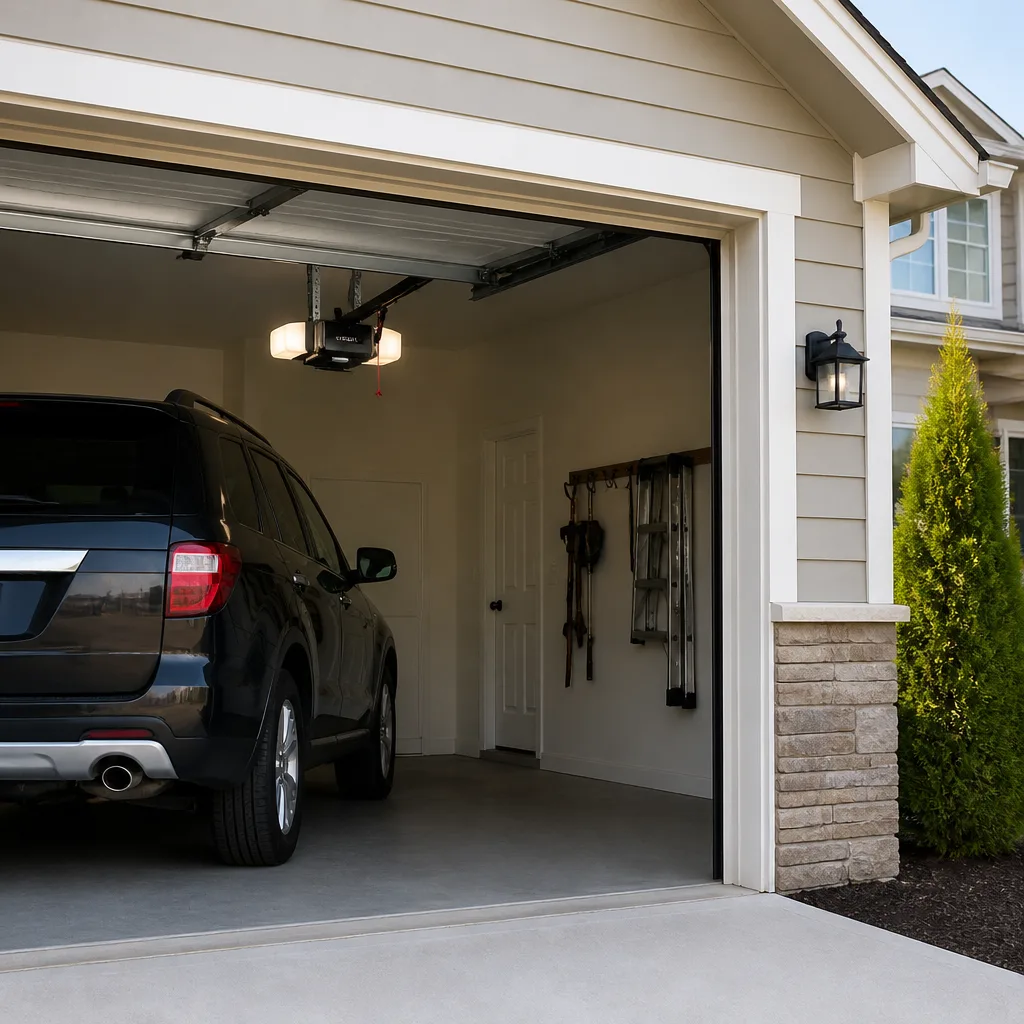 LiftMaster openers
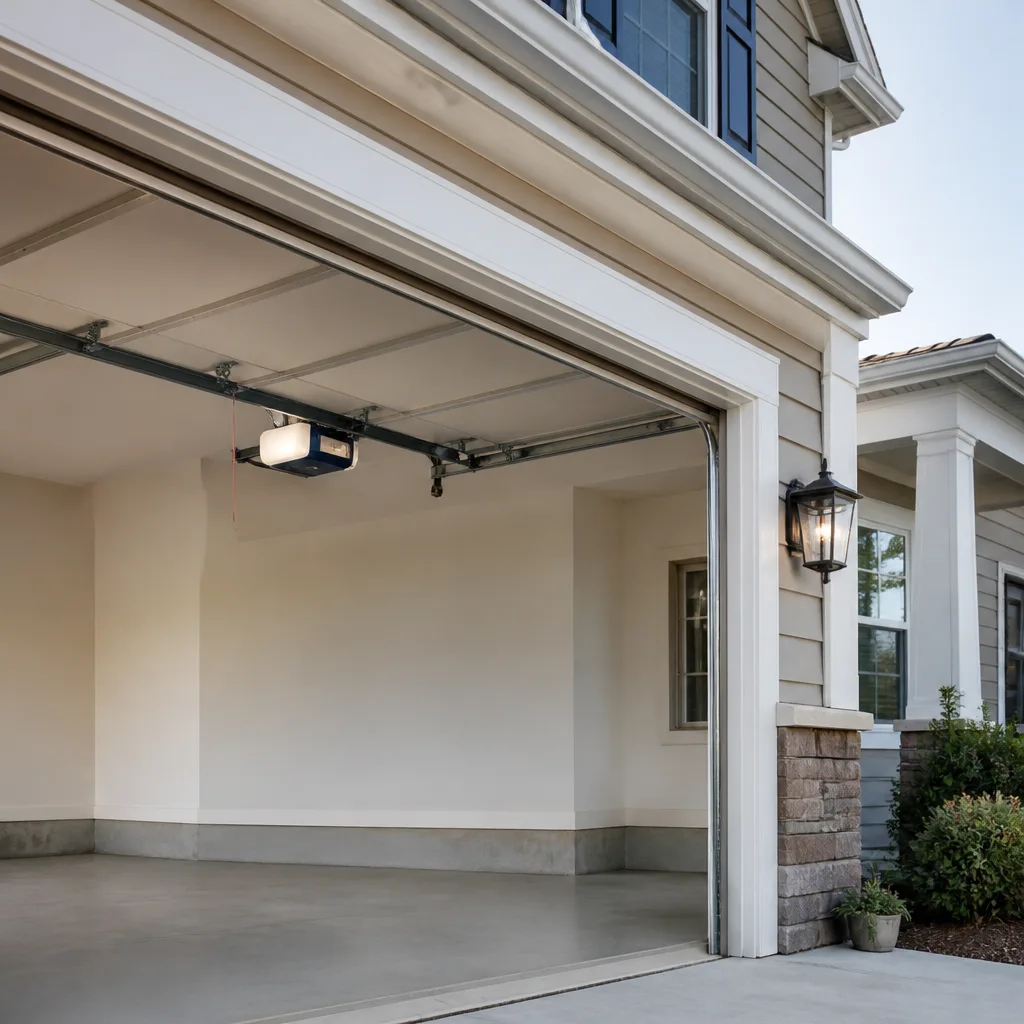 Chamberlain openers
Full 25-point door and opener safety check with every visit - springs, cables, rollers, tracks, and your LiftMaster or Chamberlain opener included
You get a price before we start. It does not change when the pro arrives.
Get your free estimateGarage Door Repair Troubleshooting in Fordham: Common Problems and How to Fix Them
A door that reverses before it hits the floor and a door that won’t move at all look like the same problem from the driveway. They’re not. One is usually a sensor or travel-limit issue on the opener; the other is often a broken torsion spring, a snapped cable, or a track that’s been knocked out of alignment. Treating those two symptoms the same way is how a cheap fix turns into an expensive one, because homeowners buy a new opener when the real problem is a five-dollar roller, or force a door that’s hanging on a single spring. This guide shows you how to read what your door is telling you before you touch anything, so you can tell a Fordham technician exactly what’s happening and get an accurate answer fast.
Quick Answer
Most garage door problems in Fordham trace to one of five components: springs, cables, tracks, the opener, or the safety sensors. Each produces a distinct failure signature, and identifying which one failed is the difference between a quick repair and an unnecessary replacement. If your door won’t move, sags to one side, or makes a loud bang, stop and call a professional – springs and cables are under extreme tension and can cause serious injury.
Styles & brands we work with
- Raised-panel steel
- Carriage house
- Modern flush
- Full-view glass
- LiftMaster openers
- Chamberlain openers
Table of Contents
- Why Component-First Diagnosis Beats Symptom-Chasing
- The Five Failure Signatures of a Garage Door
- How to Run the Manual Release Test Safely
- Why Fordham’s Climate Stresses Your Springs Faster
- Which Repairs Are Genuinely DIY-Safe (and Which Aren’t)
- How to Describe Your Problem So You Get an Accurate Quote
- Opener Troubleshooting: When the Door Won’t Respond
- Preventive Checks That Buy You Years
Why Component-First Diagnosis Beats Symptom-Chasing
Every garage door system is five parts working together: the springs (which do the actual lifting), the cables (which connect the springs to the door), the tracks (which guide the door), the opener (which supplies the push), and the safety sensors (which stop the door if something’s in the way). When one fails, the door sends a message. Your job is to listen.
Symptom-chasing is what happens when you Google “door won’t close” and land on a page that tells you to replace the opener. That advice is right maybe a third of the time. The other two-thirds, the opener is fine and something mechanical upstream is the culprit. A sagging door with a straining opener isn’t an opener problem – it’s a spring problem that’s wearing the opener out. Replacing the opener fixes the symptom and leaves the real failure untouched, which is why the door acts up again a few months later.
Component-first diagnosis flips the question. Instead of “what’s wrong with my door?”, ask “which part stopped doing its job?” Here’s how we frame it at Garage Door Repair Fordham: look at the door’s behavior in three states – at rest, in motion, and at the limits (fully open or fully closed). Each state exposes different components. A door that rests crooked but moves smoothly points to a cable or track issue on one side. A door that rests level but jerks in motion points to rollers or a balance problem. A door that’s mechanically fine but refuses to close points straight at the sensors or the opener’s travel settings.
That’s why we ask what the door looks like when it’s sitting still before we ask anything else. The resting position is the most honest diagnostic clue most Fordham homeowners already have access to, and they usually haven’t looked at it.
The Five Failure Signatures of a Garage Door
Here’s the framework we use to sort out what’s actually failing. Each of the five components speaks a different language, and once you know the vocabulary, diagnosis gets much faster.
Springs
- Signature: A loud bang from the garage, followed by a door that suddenly feels extremely heavy or won’t open at all. Sometimes the door will open a foot and stop dead.
- Where to look: Above the door on a torsion system, or along the sides on extension springs. A gap in the coil is the visual giveaway.
- Safety: Springs are under hundreds of pounds of tension. Never touch one. This is the single most dangerous component on any garage door, and it’s the repair we most often tell homeowners to leave alone.
Cables
- Signature: The door sags to one side, or hangs at an angle. You might hear a metallic snap or a whipping sound. Sometimes the door jams partway and won’t budge.
- Where to look: The steel cables running along the sides of the door. Fraying, kinks, or a cable hanging loose are dead giveaways.
- Safety: Cables are also under tension and can recoil violently when they snap. Treat a visibly damaged cable as a do-not-touch situation.
Tracks
- Signature: The door grinds, scrapes, or pops as it moves. It may jump the track entirely and hang crooked. Rollers can pop out of the track on a hard hit.
- Where to look: The vertical and horizontal rails. Dents, bends, or a gap where a roller has escaped.
- Safety: Track damage is usually impact or wear-related, not tension-related. But a door off its track is unstable and shouldn’t be operated.
The Opener
- Signature: The motor runs but the door doesn’t move, or the door moves erratically. Lights flash, the opener hums, or the unit clicks and stops. Remote and wall-button behavior may differ.
- Where to look: The unit on the ceiling, the wall button, the remotes, and the travel-limit and force settings.
- Safety: Opener work is mostly electrical and mechanical, at low voltage in most residential units, but the door itself is still under spring tension. Don’t assume the door is safe to move just because the opener is off.
Safety Sensors
- Signature: The door opens fine but refuses to close, or reverses immediately after starting to close. The opener’s light often blinks in a pattern when the sensors are triggered.
- Where to look: The two small lenses at the base of the tracks, about six inches off the floor. Check for misalignment, dirt, spider webs, or something blocking the beam.
- Safety: Sensors are low-risk to inspect and clean. This is the most DIY-friendly of the five.
If you can identify which signature you’re seeing, you’re most of the way to a diagnosis. If two or more signatures overlap, that’s a sign of a cascading failure – a broken spring that strained the opener, for instance – and it’s worth a professional look. Our garage door repair team works through these signatures in order, and we’ve found that overlapping symptoms usually point to one root cause that hasn’t been addressed yet.
How to Run the Manual Release Test Safely
This is the single most useful thing a homeowner can do before calling anyone. The manual release disconnects the opener from the door so you can feel what the door itself is doing, independent of the motor. What you learn from the test tells a technician more than any description could.
Before you start: Make sure no one is under or near the door, and that you can hold the door’s weight if something goes wrong. Do not run this test if you already know or suspect a broken spring, a snapped cable, or a door that’s off its track. If the door feels dangerously heavy at any point, lower it and stop.
- Close the door fully using the wall button, then wait for the opener to stop.
- Pull the manual release cord hanging from the opener’s carriage. You should hear a click as the carriage disengages from the door arm.
- Lift the door by hand about halfway, slowly. Note the effort. A properly balanced door should lift with one hand and stay put when you let go at any point.
- Let go. A balanced door holds its position. A door that drops, sags to one side, or falls fast points to spring or cable failure.
- Lower it back down and re-engage the carriage by pulling the cord again or running the opener until it reconnects.
Here’s what the test tells you:
- Door lifts with one hand and holds: the springs and cables are healthy. The problem is almost certainly the opener, the sensors, or the travel settings.
- Door is extremely heavy to lift, or won’t stay up: spring or cable failure. Stop testing and call a professional.
- Door sags to one side as it lifts: cable or track issue on the sagging side.
- Door moves freely but grinds or scrapes: rollers, track alignment, or hinge wear.
That’s a lot of diagnostic information from a two-minute test. Write down what you saw and you’ll be able to describe it accurately on the phone, which is the next section.
Why Fordham’s Climate Stresses Your Springs Faster
Most garage door guides are written as if every door lives in a mild, dry climate. Fordham isn’t that place, and the difference matters for how often springs fail and which parts wear out first.
Fordham sits close to the Harlem River, and that proximity brings a real humidity load for much of the year. Humidity is hard on the steel components of a garage door system. Torsion springs, cables, and the metal hinges and rollers all sit in a space that swings between damp and dry as the seasons turn. The result isn’t a dramatic failure – it’s accelerated wear. Springs that might last longer in a dry climate tend to cycle out faster here, and the coils are more prone to the corrosion that weakens them from the inside. If your door lives on the ground floor of a building near the river, or in a garage with poor ventilation, the effect is stronger.
Then there are the temperature swings. Fordham gets real cold snaps in winter and hot, sticky stretches in summer, and the door has to work in both. Steel expands and contracts with temperature, and a torsion spring that was perfectly tensioned in October can feel different by February. Springs are rated for a certain number of cycles – one open and one close counts as a cycle – and the constant expansion and contraction plus the humidity load generally shortens their working life compared to a stable, dry climate.
Cables feel the same pressure. The cables run over pulleys and around drums, and temperature-related expansion makes them work slightly harder in the cold. That’s why a lot of cable failures happen on the coldest mornings of the year, when the door is stiff, the metal is contracted, and the cable takes a shock load it wouldn’t see in summer.
What does this mean for you practically? Two things. First, if you’re on a street near the Harlem River or in one of the older Fordham buildings with a garage that runs damp, check your springs and cables more often than a typical guide suggests. Second, spring replacement in Fordham isn’t a maybe-someday project. When one spring breaks, the matched pair usually goes together, and the second spring is often not far behind. We talk more about that below.
If your door has been acting stiff, slow, or heavier than usual through a cold spell, that’s the climate talking. It’s worth a look before the next cold snap turns a tired spring into a broken one.
Which Repairs Are Genuinely DIY-Safe (and Which Aren’t)
We’re not going to pretend every garage door repair needs a professional. Some do. Some absolutely don’t. Here’s the honest split, sorted by risk.
Genuinely DIY-safe
- Cleaning and realigning safety sensors. Wipe the lenses, check they’re pointed at each other, and make sure nothing’s blocking the beam. This alone fixes a large share of “door won’t close” calls.
- Replacing remote batteries and re-pairing remotes. A dead battery or an unpaired remote isn’t a repair, it’s maintenance, and it’s simple on most major brands including LiftMaster and Chamberlain units.
- Lubricating rollers, hinges, and the door’s moving parts. A garage-door-rated lubricant on the rollers and hinges quiets a noisy door and slows wear. Don’t lubricate the tracks – that attracts dirt.
- Clearing obstructions and resetting the opener. A power cycle and a check of the travel limits and force settings can resolve a surprising number of opener glitches.
- Visual inspection. Look at the springs, cables, and tracks regularly. Catching a frayed cable or a bent track before it fails is the cheapest repair there is.
Not DIY-safe
- Spring replacement. Torsion springs are under hundreds of pounds of tension. Homeowners who try to wind or unwind them by hand have been seriously injured. This is the repair we most firmly tell people not to attempt. Springs are the most dangerous part of your garage door, and we handle them so you don’t have to.
- Cable replacement. Same principle. A snapped cable can whip with enough force to break bones.
- Track realignment when the door is under load. A door off its track is unstable, and adjusting tracks while the door is hanging is a good way to get hurt.
- Opener replacement or major electrical work. A like-for-like remote pairing is fine; rewiring a circuit or replacing an opener is not a Saturday project.
The line here isn’t about skill. It’s about tension. Anything that involves the springs or cables is a trained-tech job, full stop. Everything else is mostly about access and patience. If you’re unsure which side of the line your problem falls on, that’s exactly the kind of question we can answer on the phone before you touch anything.
How to Describe Your Problem So You Get an Accurate Quote
Here’s something that saves everyone time: most garage door problems can be diagnosed well enough over the phone to give you a real estimate before anyone drives out. Not every problem, but most. The difference between a vague call and a good one is whether you can describe the failure signature accurately.
A good description answers these questions:
- What is the door doing when you press the button? Nothing at all? Motor runs but door doesn’t move? Moves a foot and stops? Reverses partway? Opens fine but won’t close?
- Where is the door now? Fully closed, fully open, stuck partway, or hanging crooked?
- What does the door look like at rest? Level, or sagging to one side? This is the single most useful clue.
- Did you hear anything when it failed? A bang, a snap, a grind, a pop, or nothing?
- Have you run the manual release test? If yes, what did the door feel like when you lifted it by hand?
- What brand is the opener and the door? If you can find the brand on the opener, tell us. We work on LiftMaster, Chamberlain, Genie, Clopay, Amarr, Wayne Dalton, Craftsman, and Raynor doors and openers.
- What’s the door’s age and approximate size? A single-car door and a double-car door behave differently, and older doors have different wear patterns.
With those answers, a technician can tell you whether you’re likely looking at a spring, a cable, the opener, or the sensors, and often give you a realistic estimate over the phone. That’s better for you than a diagnostic visit that turns out to be a ten-minute sensor fix.
One thing to be straight about: prices are quoted and agreed before any work starts. You’ll know what the job will cost before we begin, and the written estimate sets the final price. No surprise invoice after the fact. That’s our standard, and it’s why we ask the right questions up front. If you’re not sure how to describe what’s happening, call us and we’ll walk you through it.
Opener Troubleshooting: When the Door Won’t Respond
The “door won’t respond” call is the most common opener complaint we get. It’s also the one most often misdiagnosed as a failed opener, when the real problem is something smaller. Before you assume the unit’s dead, work through this list.
- Check the power. Is the opener plugged in? Is the outlet live? Has a breaker tripped? The wall button should light up if the unit has power.
- Try the wall button, not just the remote. If the wall button works and the remote doesn’t, the problem is the remote, the battery, or the pairing – not the opener. If neither works, the opener itself is suspect.
- Check the sensors. A door that opens but won’t close, or reverses immediately, is almost always the sensors. Clear the lenses and check alignment.
- Check the travel limits and force settings. If the door stops partway or reverses, the opener may be hitting a force limit that’s set too tight, which can happen as a door gets stiffer in cold weather.
- Listen for the motor. If the motor hums but the door doesn’t move, the opener’s gear or the door’s carriage may have failed, or the manual release may be engaged.
- Look at the opener’s light patterns. Most modern openers, including LiftMaster and Chamberlain units, blink in specific patterns that correspond to specific faults. Note the pattern.
If you’ve been through that list and the door still won’t respond, it’s time for a proper look. Our garage door opener repair service focuses on the opener separately from the door, which means you’re not pushed into a door replacement conversation when the actual fix is a gear, a sensor, or a logic board. That’s a deliberate choice on our part – the opener is the part most homeowners can get back up and running quickly, and it’s the one they most often get talked into replacing unnecessarily.
If you’re considering a new opener rather than a repair, it’s worth understanding the trade-off between repair and replacement, and we’re happy to talk through both. What we won’t do is push a replacement when a repair will hold.
Preventive Checks That Buy You Years
Prevention on a garage door isn’t complicated. It’s mostly paying attention to a handful of things on a regular schedule, which is a lot easier than a failed spring in February.
- Look at your springs and cables monthly. A gap in the spring coil, a frayed cable, or a kink means a call. Catches like these are cheap.
- Lubricate the moving parts twice a year. Rollers, hinges, and the door’s pivots. Not the tracks.
- Run the manual release test every few months. It’s the fastest way to catch a balance problem before the opener starts straining.
- Clean and check the safety sensors. Wipe the lenses and confirm alignment whenever you clean the garage.
- Listen to the door. A door that’s gotten louder, slower, or jerkier over a few months is telling you something’s wearing. That’s a repair, not a replacement.
- Look at the tracks. Any visible bend or misalignment should be looked at before it turns into a door off its track.
- Consider the seasonal effect. In Fordham, spring and fall are the times to check the system, because that’s when temperature swings put the most stress on the springs and cables.
Preventive attention is also how you avoid the classic trap of a door that’s been running on one spring for months. A door on a single spring stresses the opener, wears the cables, and puts uneven load on the tracks. Catching it early costs one spring. Catching it late costs a spring plus an opener plus a cable. If your home has a garage door that’s more than a few years old and you’ve never had it looked at, a preventive check is worth the call. If you’re thinking about replacing the door itself rather than repairing it, our garage door installation page covers what to expect; we’ll also tell you honestly when a repair is the better call.
Common Mistakes to Avoid
- Replacing the opener when the door is the problem. A broken spring makes the opener work harder, and a homeowner who replaces the opener without fixing the spring ends up with a dead opener and a broken spring. Diagnose the door first, then the opener.
- Pulling the manual release and letting the door drop. If the springs are already compromised, the door can come down hard and fast. Support the door’s weight before you pull the cord, and stop the test if it feels heavy.
- Assuming “door won’t close” means a failed opener. In Fordham, that symptom is far more often a sensor misalignment or a travel-limit setting. Check those first, and you’ll save yourself a diagnostic visit.
- Ignoring one spring because the other still works. Matched pairs are designed to carry the load together. Running a door on one spring overloads the opener, the cables, and the tracks. Replace the pair, not the single.
- Lubricating the tracks. It feels right – tracks are moving parts – but lubricant on the tracks attracts dirt and grit that wear the rollers faster. Lubricate the rollers, not the rails.
- Assuming a noisy door is a failing door. A grind or squeal is often a worn roller or hinge, not a spring. Noise is a maintenance call, not a replacement call.
- Discounting the climate. A door that acts stiff in cold weather isn’t “just being a door there.” Fordham’s humidity and temperature swings wear springs and cables faster than a stable climate, and treating the door as if it lives somewhere milder is how the first cold snap catches you out.
See the difference
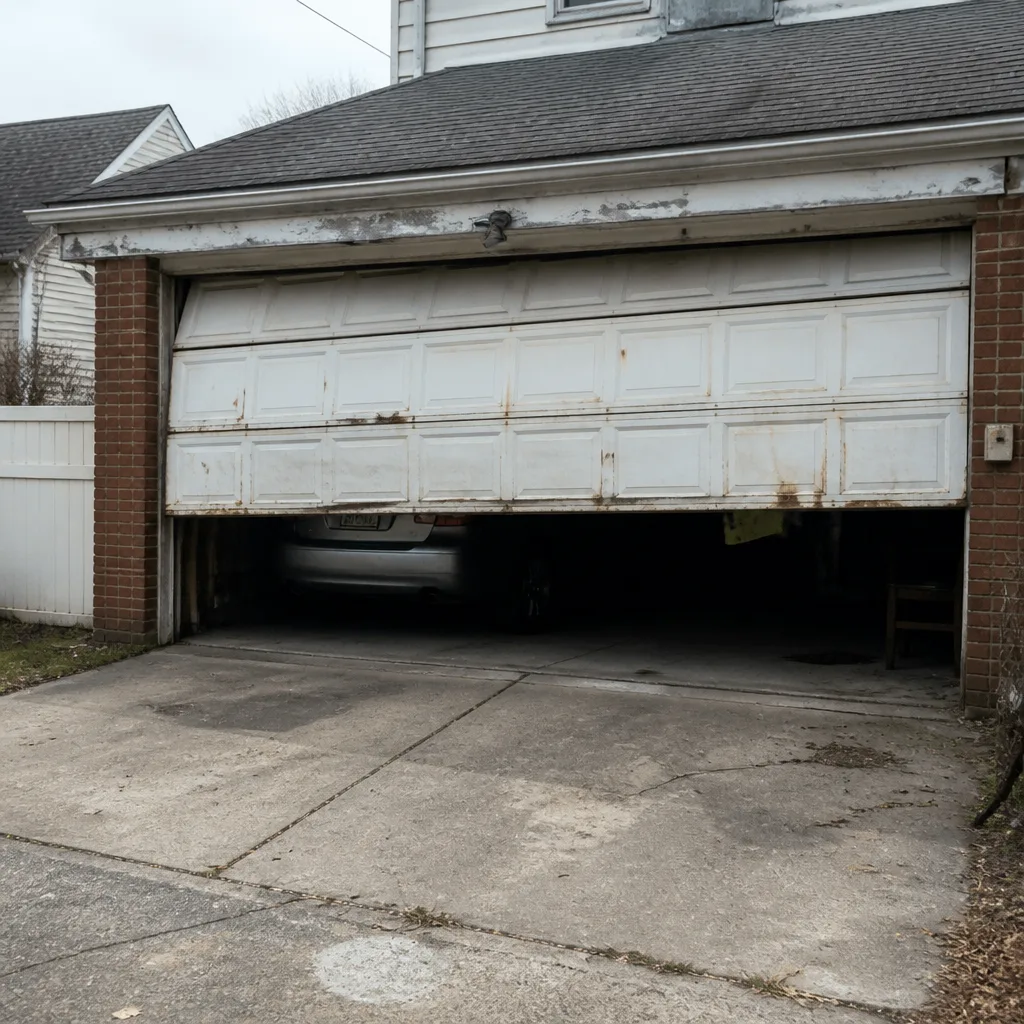 Before
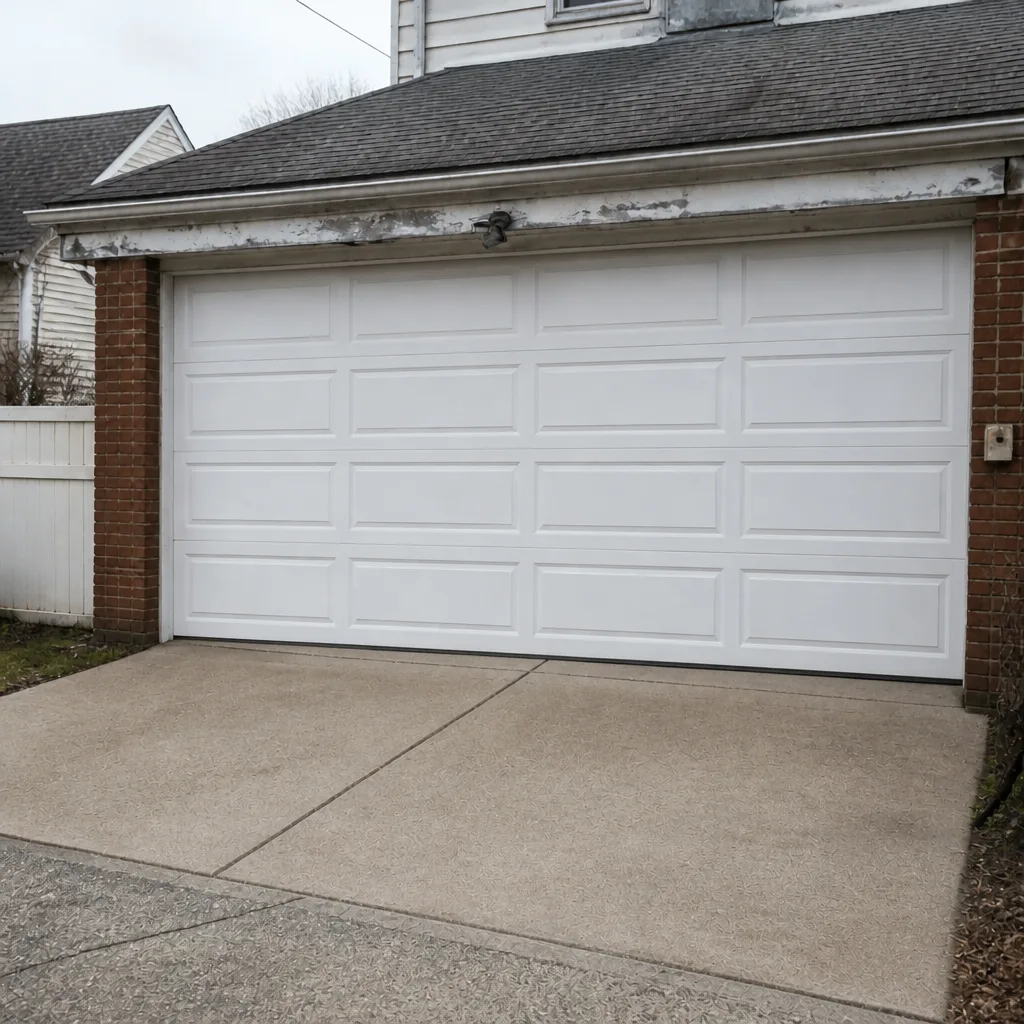 After
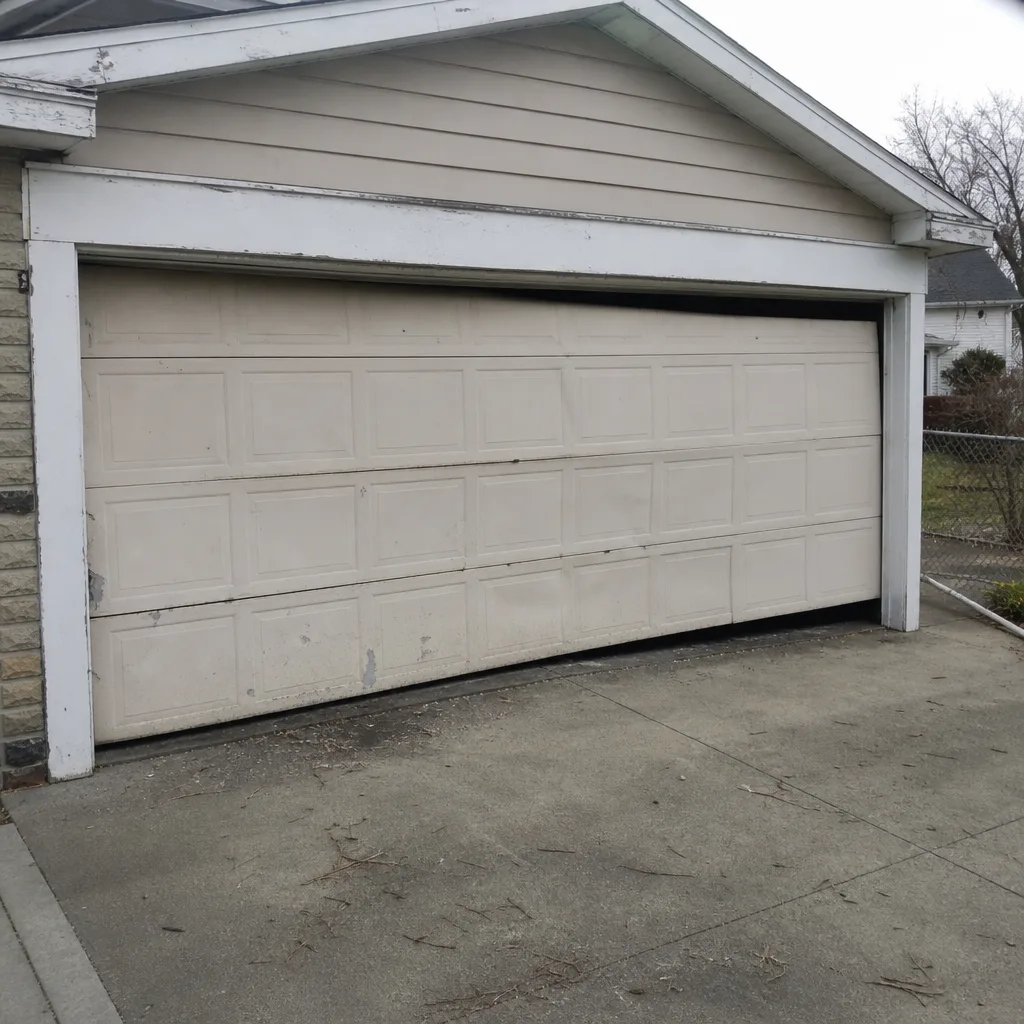 Before
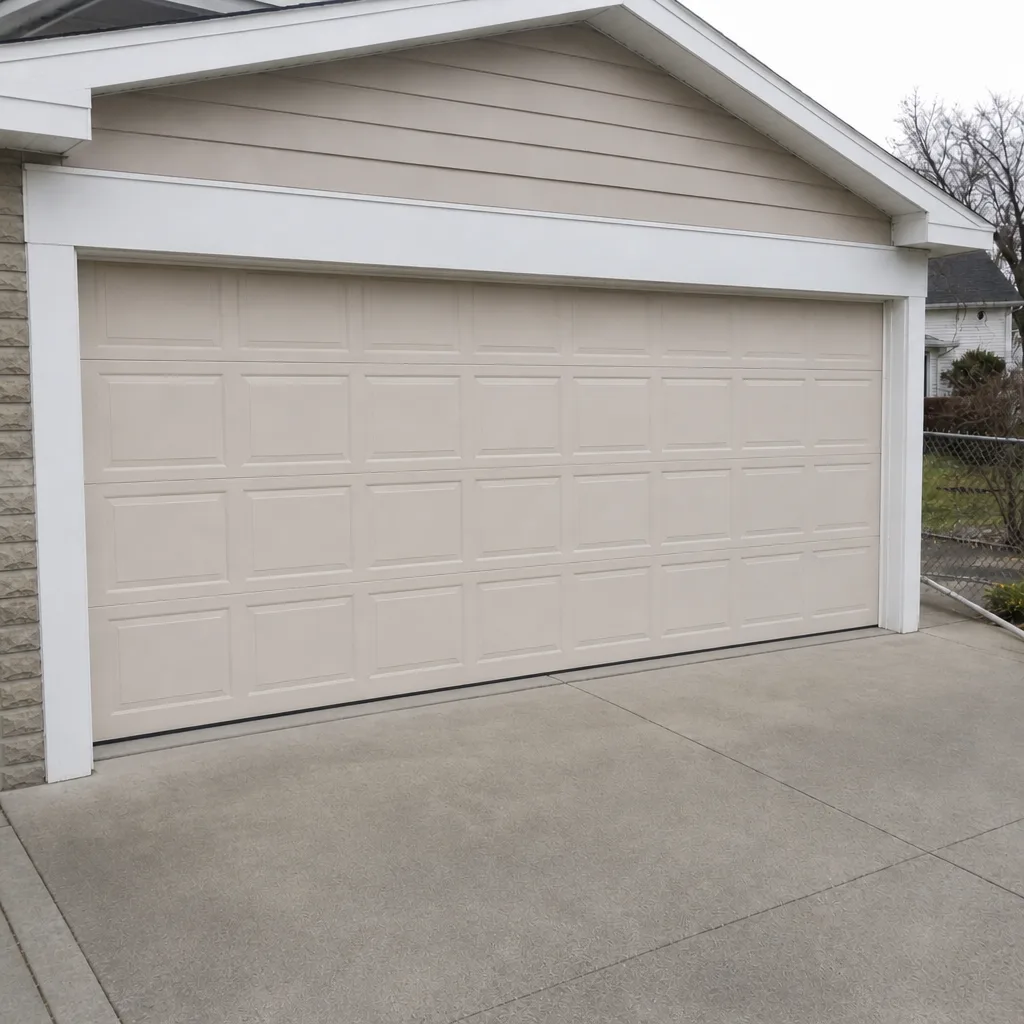 After
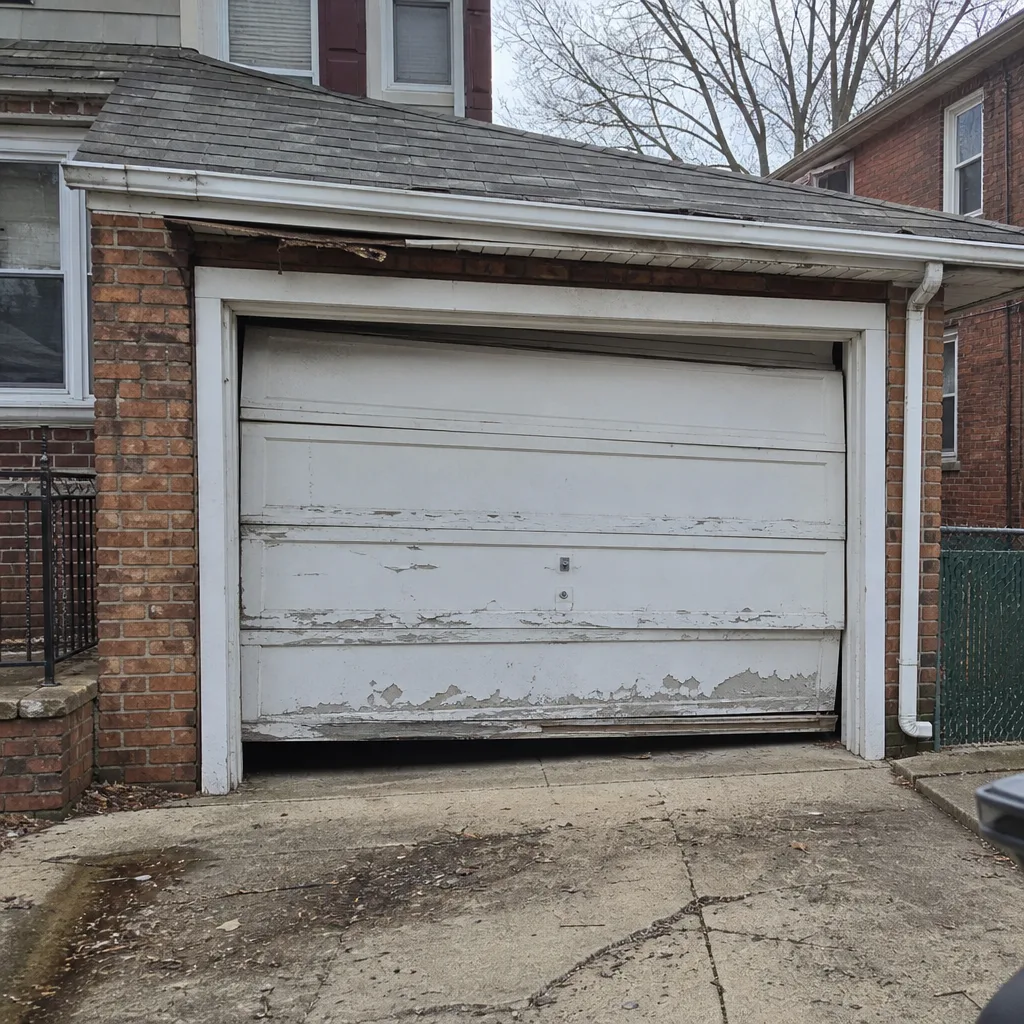 Before
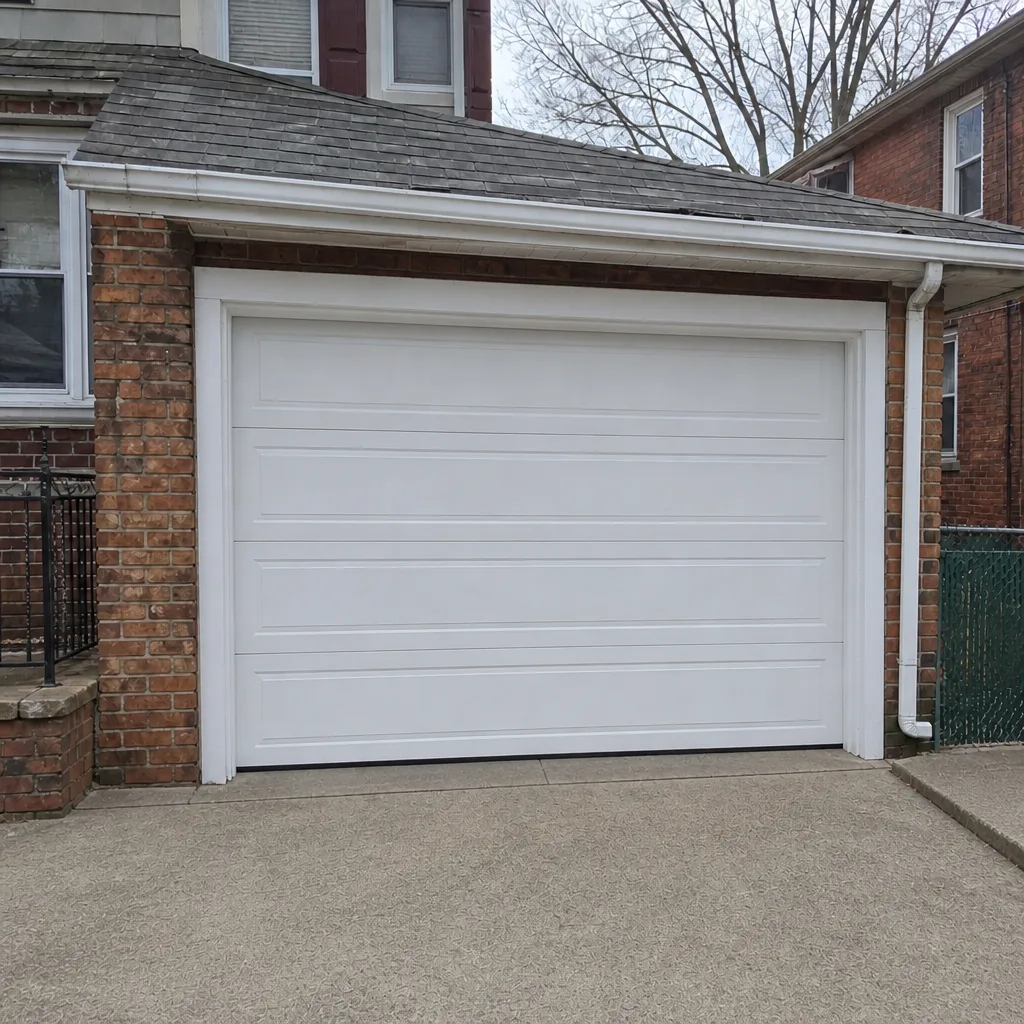 After
When to Call a Professional
Here’s the simple test. Call a professional if any of these are true: the door won’t move at all, the door sags to one side, the door is off its track, you heard a loud bang followed by a dead door, you see a visible gap in the spring coil or a frayed cable, or the manual release test leaves you with a door that’s dangerously heavy. Those are all signs of a tension-component failure, and tension components are not a homeowner repair. Call us if you’ve run the sensor and opener checks and the door still acts up, or if you’re simply not sure which of the five signatures you’re seeing.
We offer free estimates in Fordham. Call (855) 901-9670 and we’ll walk you through what to check and what it likely means. Our technicians have up to 9 years of experience, we work on the eight major brands, and the estimate we give you is the price you pay – agreed before any work starts.
Frequently Asked Questions
Most garage door repairs in Fordham fall into a few typical ranges: a safety sensor realignment or a remote re-pair is a small, quick fix, while spring and cable repairs cost more because of the labor and the matched-pair replacement. The written estimate sets the final price, and we quote and agree on that price before any work starts. Call (855) 901-9670 for an exact quote – estimates are free.
Yes, we offer same-day and emergency service for doors that are stuck open, stuck closed, or won’t lock, because a door hanging open is a security problem that can’t wait for a scheduled appointment. Call (855) 901-9670 and tell us what the door is doing, and we’ll get you on the schedule. Fast dispatch runs from 7am to 7pm.
No, the price we agree on before work starts is the price you pay, and the written estimate sets the final price. If we find a second issue while we’re on site, we’ll show it to you and quote it separately before we touch it. We don’t add charges to an agreed quote without your sign-off.
Yes, the local professional who arrives is licensed and insured as their state requires. If you’d like to see credentials on arrival, just ask. Our technicians have up to 9 years of experience, and we work on LiftMaster, Chamberlain, Genie, Clopay, Amarr, Wayne Dalton, Craftsman, and Raynor doors and openers.
Matched pairs are almost always replaced together, because the second spring has taken the same load and is usually close to failing. A pair costs about twice a single spring. Replacing one spring and leaving the other runs the door unbalanced and overloads the opener and cables. Call (855) 901-9670 and we’ll confirm whether your setup is a matched pair.
That’s almost always the safety sensors, not the opener. The lenses at the base of the tracks get knocked out of alignment, dirty, or blocked by a spider web, and the opener refuses to close the door because the beam is broken. Wipe the lenses first, then check alignment. If the sensors check out and the door still won’t close, the travel-limit setting or the opener’s logic board is the next place to look – call (855) 901-9670 if you want us to diagnose it.
The Bottom Line
The reason most garage door problems get expensive is that homeowners chase the symptom instead of the component. A door that won’t move and a door that reverses aren’t the same failure, and neither is a problem with the springs, the cables, the tracks, the opener, or the sensors. Learn the five failure signatures, run the manual release test safely, and describe what you’re seeing accurately – and you’ll get an accurate diagnosis without an unnecessary diagnostic visit. In Fordham, the climate along the Harlem River speeds up spring and cable wear, so preventive attention matters more here than a generic guide suggests. If you’re facing a spring, cable, or off-track problem, that’s a professional job. Call Garage Door Repair Fordham at (855) 901-9670 for a free estimate, and we’ll get you back up and running with a price agreed before any work starts.
Written by the team at Garage Door Repair Fordham.