Last updated November 21, 2026
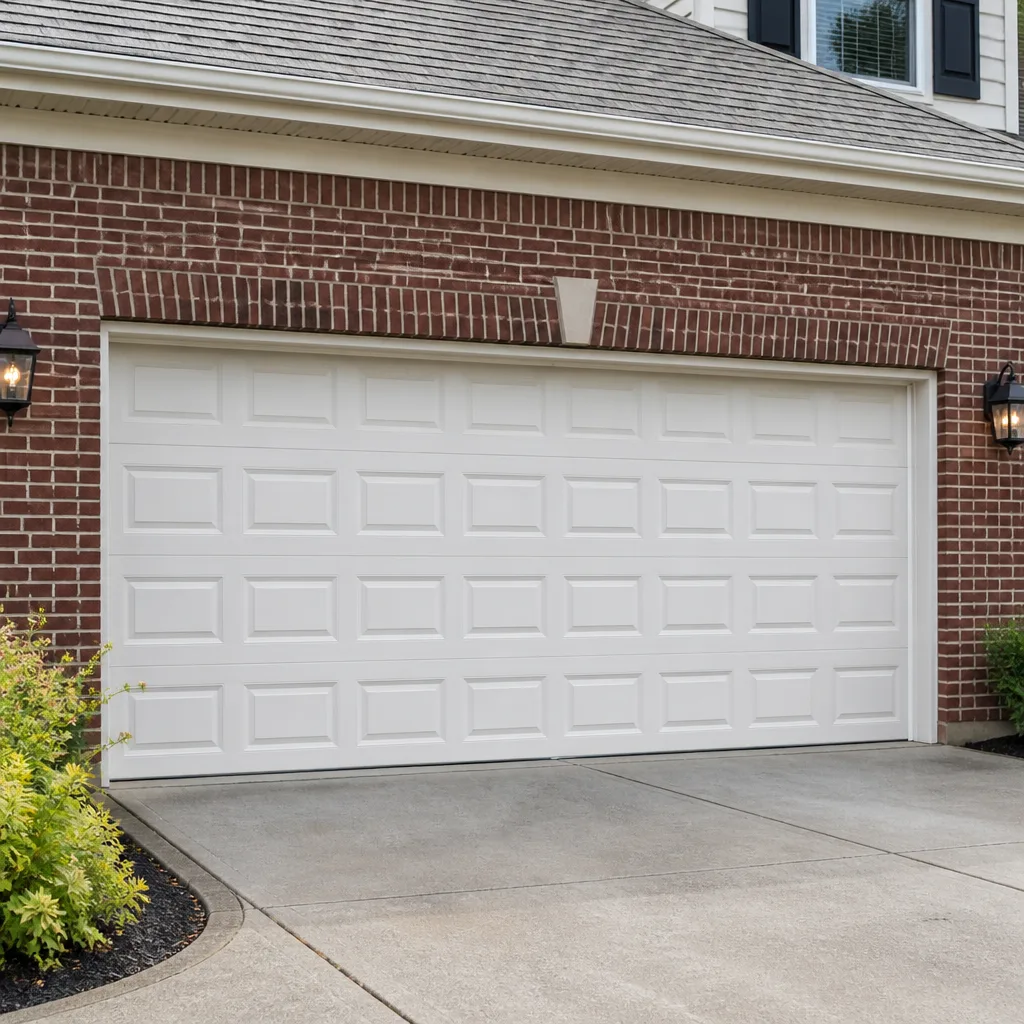 Raised-panel steel
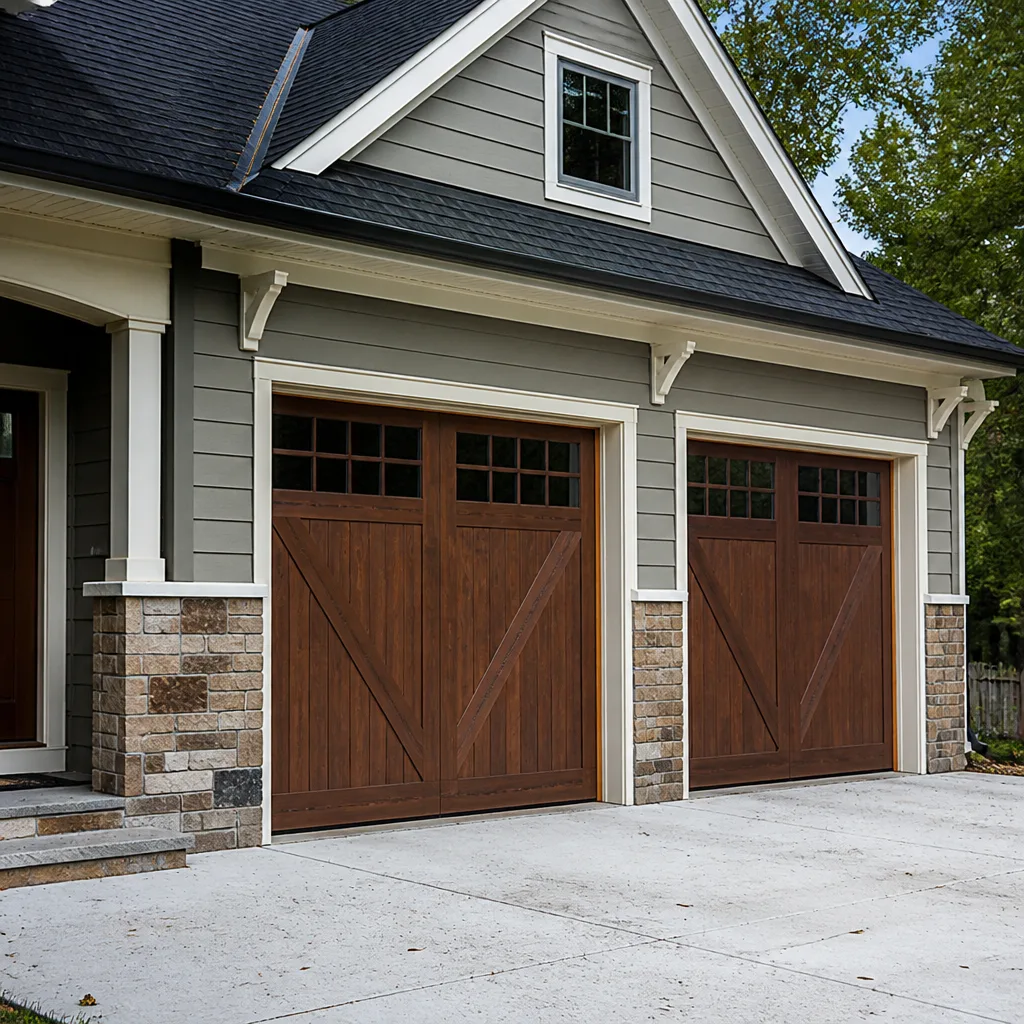 Carriage house
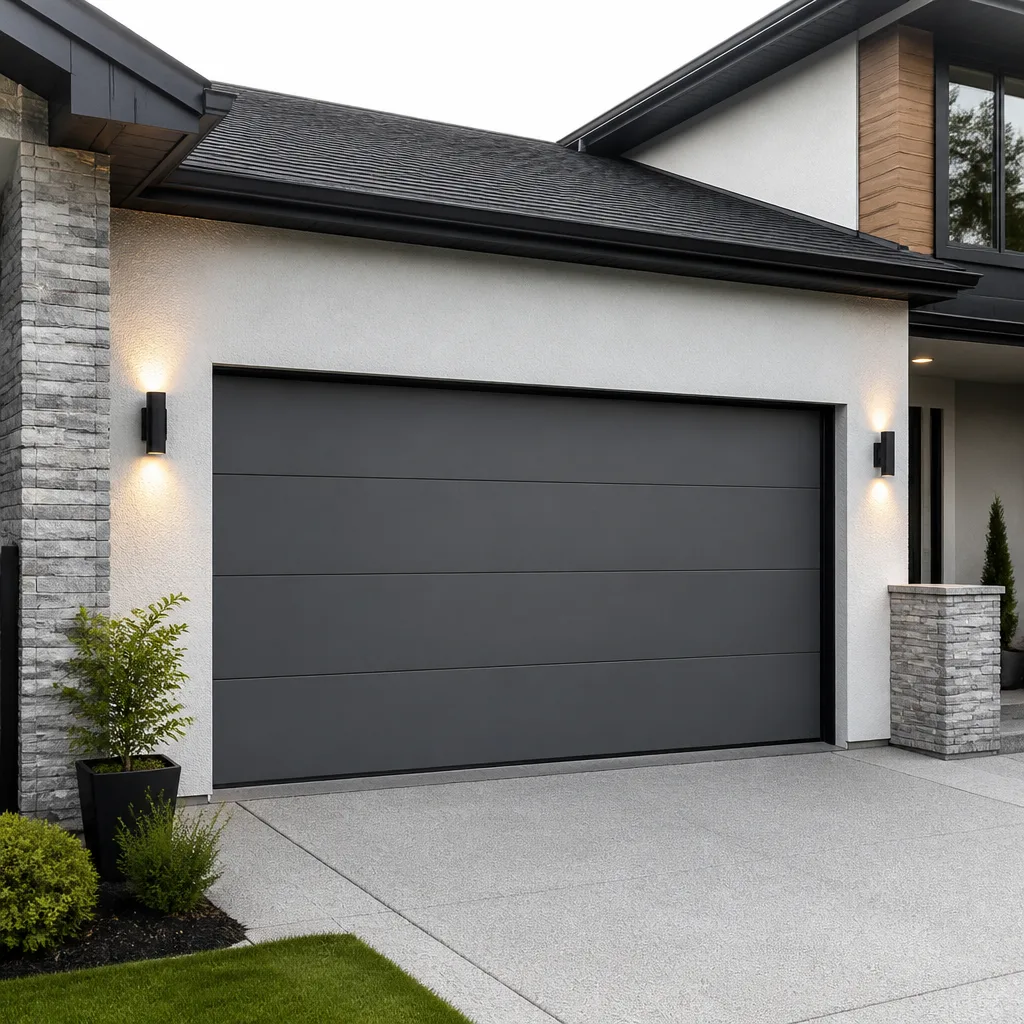 Modern flush
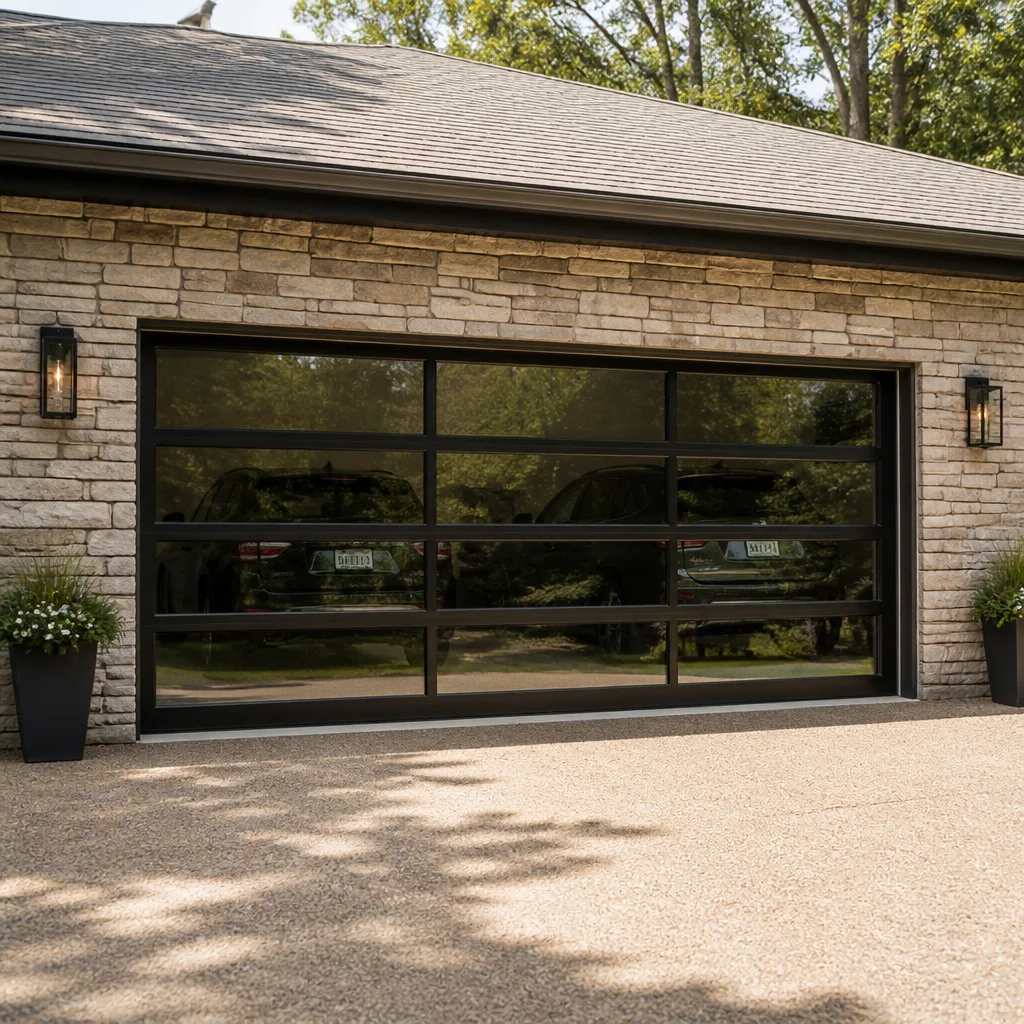 Full-view glass
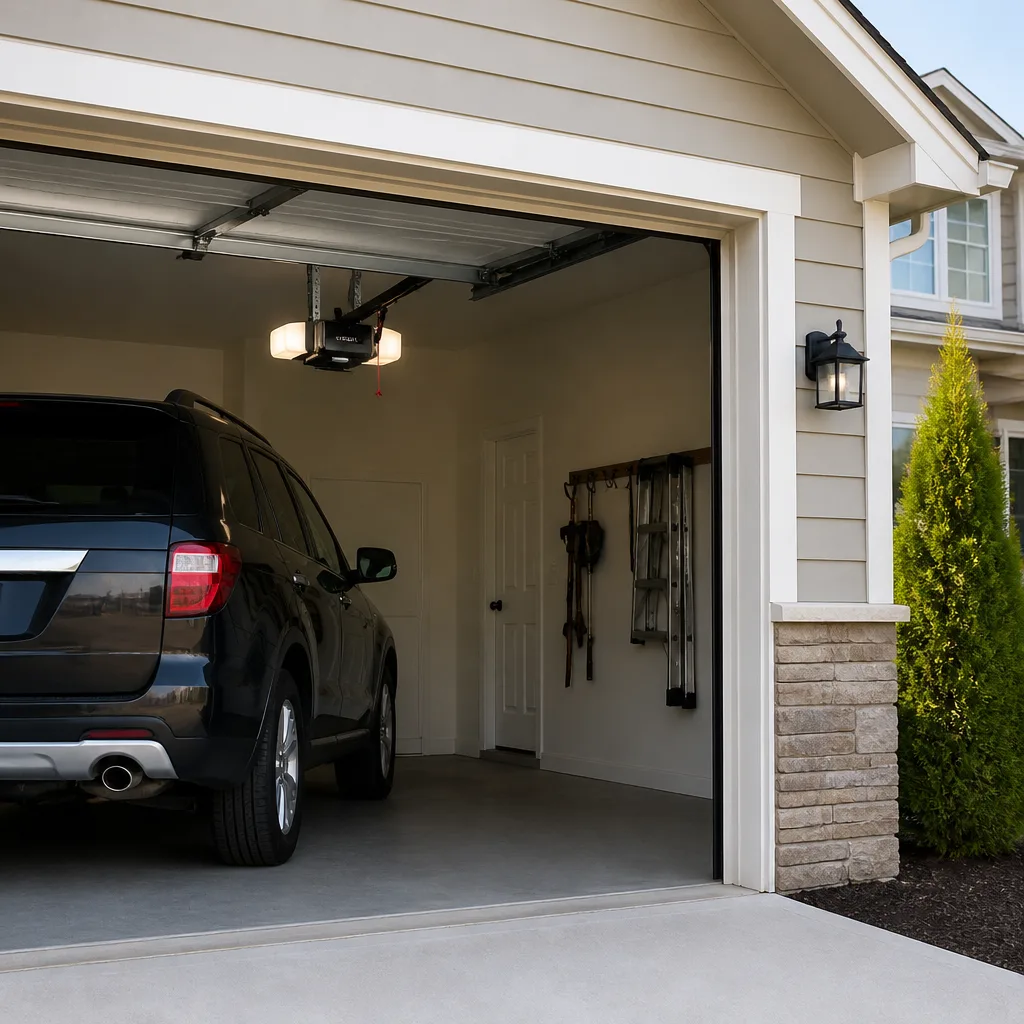 LiftMaster openers
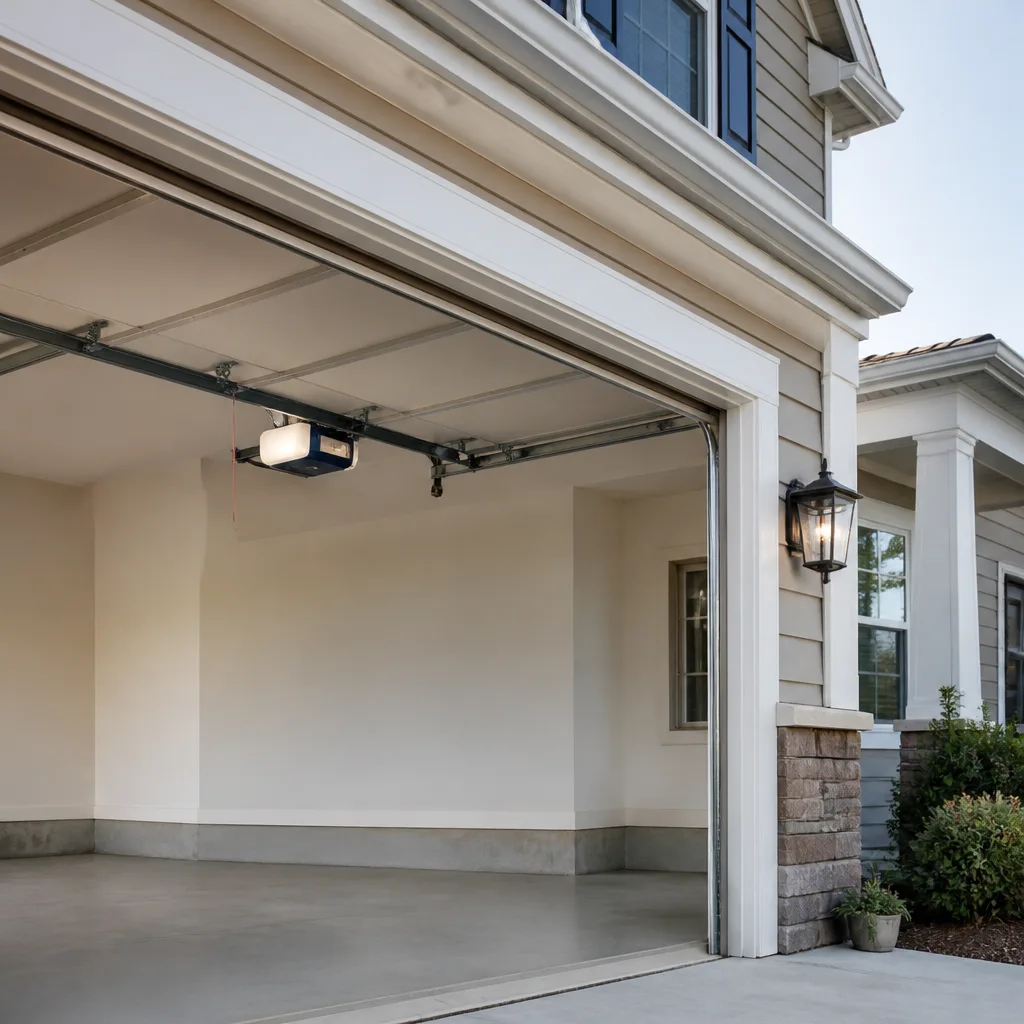 Chamberlain openers
Full 25-point door and opener safety check with every visit - springs, cables, rollers, tracks, and your LiftMaster or Chamberlain opener included
You get a price before we start. It does not change when the pro arrives.
Get your free estimateGarage Door Warning Signs: A Fordham Homeowner’s Reference Guide
Most garage door failures don’t arrive without warning. They announce themselves first, and almost every homeowner walks past the announcement for weeks. A little unevenness on the way up. A rubbing sound in the last few seconds of closing. A remote that needs two presses instead of one. None of it seems urgent, so it gets filed away until the door stops working on a morning you actually need it. This guide is written to fix that. It decodes what each sound, movement and visual cue means inside the mechanism, so a Fordham homeowner can tell the difference between a nuisance, a job for next week, and something to call about now.
Quick Answer
The most reliable garage door warning signs are an unbalanced door, grinding or squealing during travel, popping sounds from the torsion bar, uneven closing gaps at the floor, a photoeye that only works when you nudge it, and an opener that runs longer or stops mid-travel. Any two of those appearing together usually point to one root cause, and it’s rarely the opener. If a spring or cable is visibly damaged or the door hangs crooked, stop using it and call a professional before the next cycle.
Styles & brands we work with
- Raised-panel steel
- Carriage house
- Modern flush
- Full-view glass
- LiftMaster openers
- Chamberlain openers
Table of Contents
- The sound diagnosis chart: what grinding, squealing, popping and slapping mean
- The asymmetry test: spotting a tired torsion spring before it snaps
- Sensor warning signs: misalignment versus actual failure
- Weather seal red flags that predict water on the floor
- Opener strain indicators that point at balance, not the motor
- Track and roller symptoms you can check from the ground
- Seasonal patterns Fordham doors show through the year
- The three-tier call: fix it yourself, book a visit, or call now
The Sound Diagnosis Chart: What Grinding, Squealing, Popping and Slapping Mean
Sound is the earliest signal a garage door gives you, and each sound maps to a specific part of the system. A grinding noise during the last six inches of closing is the one homeowners most often misread. It’s rarely a roller problem. It’s almost always a cable starting to fray, and it usually shows up only a few dozen cycles before a full cable snap. That’s not a sound to live with.
Here’s how we sort the four common sounds on arrival:
- Grinding – a dry, rough scrape, often near the end of travel. Fraying cable, worn bearing plates, or a torsion bar rubbing where it shouldn’t. The late-travel pattern is the giveaway. Treat it as urgent.
- Squealing – a high pitch that rises and falls with door speed. Usually rollers, hinges or the torsion bar running dry. Rarely dangerous, but it compounds into wear if ignored for a season.
- Popping – a sharp crack, often one at a time, sometimes paired with a small jump in the door. That’s the torsion system releasing stored tension unevenly. Don’t keep cycling it to see if it repeats.
- Slapping or banging – a flat, loose rattle as panels move. Loose hinge screws, a vibrating panel, or a door that has drifted out of alignment in its tracks.
Two of those sounds (grinding and popping) are spring-and-cable territory, the highest-risk part of any garage door system. We handle that work as a garage door spring repair job so it gets diagnosed as its own problem, not folded into a general tune-up. If your door is making either sound right now, close this page and call.
The Asymmetry Test: Spotting a Tired Torsion Spring Before It Snaps
A torsion spring doesn’t usually break without a warm-up. It loses tension gradually, and the door tells you through asymmetry. Stand outside and watch the door rise from fully closed to fully open. Look at the gap between the top panel and the header as it moves. On a healthy door, that gap opens evenly across the width. On a tired spring, one side lags by an inch or more, and the door tilts slightly as it climbs.
The asymmetry test takes about thirty seconds and needs no tools:
- Stand square to the door, about ten feet back, at the centerline.
- Press the wall button or remote and watch the full travel from the floor to the header.
- Note whether one side reaches the top before the other, or whether the door seems to stall briefly at the halfway point.
- Repeat twice. A pattern is a real signal. A single odd cycle could be a cold morning or a stiff roller.
If the door consistently rises crooked, or you can lift it by hand off the floor more easily than you’d expect, the spring has lost tension. If it tilts and then drops back slightly on one side, the spring may already be partly broken on a two-spring setup, and you’re running on one. Either way, stop using the door. Lift the door by hand with the opener disconnected and you’ll find it either too heavy or too light. Both are wrong, and both point at the springs.
Springs hold enough stored energy to cause serious injury. Extension springs especially, where a broken spring can whip toward anything in its path. Please don’t try to adjust, lubricate past, or re-wind a torsion spring yourself. This is the one part of a garage door where the right answer is always the trained technician.
Sensor Warning Signs: Misalignment Versus Actual Failure
The photoeye sensors at the base of your tracks look identical whether they’re misaligned or actually failed. From the outside, both show the same symptoms: the door starts to close, reverses partway, and comes back up. Or the opener clicks but the door never moves. The difference is in how often it happens and under what conditions.
Misalignment shows up as intermittent failure. The door closes fine nine times out of ten and reverses only when the sun is low, or after a car has been parked in the driveway, or when a leaf blows through. Both sensors have a small LED indicator light, usually amber or green. A steady light means the sensor sees its partner. A flickering light means the beam is being interrupted. A dark light means the sensor has lost power or failed. Stand at eye level and check whether the two lights behave the same way as the door cycles.
Actual sensor failure is steady and total. The beam is broken every cycle, the LED is dark or solid red on both sides, or the actuator button on the opener no longer responds even with the sensors clean and pointed at each other. That’s a component problem, not an alignment problem, and it’s a common trip we make for Chamberlain and Genie openers.
The reason this matters: a sensor that reverses intermittently is a door that can crush a pet, a child’s toy, or a bike wheel it doesn’t see. Don’t keep pressing the remote hoping it takes this time. If a sensor reverses on you more than twice in a day, that’s a same-day call. Sensor work is part of garage door opener repair, and we treat it as urgent precisely because the failure looks harmless right up until it isn’t.
Weather Seal Red Flags That Predict Water on the Floor
A water stain on the garage floor is a late-stage warning. By the time water is pooling inside, the bottom seal has been failing for months. The earlier signals are visible on the door itself.
- Flattened bottom rubber – the seal should return to its original shape when the door lifts. If it stays crushed against the floor, it has lost its memory and won’t seal on the next close.
- Visible daylight – on a closed door, look along the bottom edge for any light coming through. Any sliver is a gap that water will find.
- Cracked or curling ends – the seal shrinks over years of sun and temperature swing, and it shrinks from the ends first. A seal that pulls back at the corners lets wind-driven rain in.
- Damp along the door’s interior face – condensation or drips on the inside of the panels, especially after a warm spell following cold nights, usually means the seal or the perimeter trim is compromised.
Fordham winters push the freeze-thaw cycle hard against the bottom seal, and door sills that sit at grade catch every melt. A dry bottom seal is doing real work in December and January. Once it fails, you’re not just looking at water on the floor. You’re looking at potential freeze at the door base, rust creeping along the bottom panel, and a door that never quite meets the sill.
Most perimeter weather seal work is straightforward and worth doing before the first hard freeze, not after. If the bottom panel is rusted through and the seal can’t bond to it, that’s a door condition worth an honest assessment visit rather than a patch.
Opener Strain Indicators That Point at Balance, Not the Motor
The most common misdiagnosis we see on arrival: a homeowner who is certain they need a new opener. Nine times out of ten, the opener is doing exactly what it was built for. The door is just too heavy for it, and the motor sounds like it’s failing because it is working harder than it should. The tell is balance.
Here’s the six-point check. Disconnect the opener by pulling the red manual release cord (the door must be closed when you do this). Then:
- Lift test – with the opener disconnected, lift the door about halfway by hand. A properly balanced door should rise with a light, even pull and stay where you leave it.
- Hang test – position the door at waist height and let go. If it slowly drifts down, the springs have lost tension. If it slams, they’re overtight, which is just as bad.
- Cycle time – if the door now takes noticeably longer to open or close than it did a year ago, the opener is pushing against a balance problem.
- Motor heat – feel the opener housing after one full cycle. A warm case after a single cycle is normal. A hot case after one cycle means the motor is overworking.
- Mid-travel stops – an opener that starts, runs partway, and stops without a sensor trigger is often hitting its force limit because the door is dragging.
- Reverse test – with the door closing, wave a broom handle across the beam. It should reverse cleanly. A slow or hesitant reverse is a sign the opener is straining.
If the door fails any of the first two checks, the springs are the problem and replacing the opener is a waste of money. We see this on older LiftMaster and Craftsman units where the opener has been quietly compensating for a weakening spring for months. The right fix is spring and balance work, which usually costs far less than a new opener. Our technicians have up to 9 years of experience with both sides of that equation, and we’ll tell you honestly which one is the culprit.
Track and Roller Symptoms You Can Check From the Ground
Track and roller issues sit in the middle of the risk scale. Some are self-fixable, some aren’t, and the visible clues tell you which is which.
- Visible bend in a vertical track – the door will shudder as it travels past the bend. If the bend is minor and near the bottom, a careful straightening may work. If it’s above waist height, don’t try it yourself; the door has to come off its tracks to do it safely.
- Loose hinges – hinge screws back out over years of vibration. If you can turn a hinge plate with two fingers, it’s loose and it’s adding noise and strain. Snugging those screws is a real DIY job.
- Rollers that wobble – steel rollers wear flat, nylon rollers crack. Cracks in a nylon roller mean it will fail soon. Both are a technician swap, not a homeowner one.
- Track gap at the transition – where the vertical track meets the curved section, a visible gap of more than a fraction of an inch lets the roller jump and the door stagger.
- Black grease on the track – if there’s grease on the tracks, someone has been lubricating the wrong part. Tracks are dry. Rollers and hinges take a light lubricant. Grease on a track traps grit and accelerates wear.
This is the category where we see the most (and most fixable) DIY mistakes. Rollers and tracks are not spring work, but the door still weighs a couple hundred pounds, and a door that leaves its track unexpectedly is dangerous. When in doubt, ask. A tracked visit is quick, and it prevents the wrong kind of surprise.
Seasonal Patterns Fordham Doors Show Through the Year
Garage doors don’t fail at random. They fail at the seams of the season, and in Fordham those seams are marked by temperature swings that push on every part of the system.
Late fall is when the balance problems surface. Cold stiffens the door’s rollers, tightens the seals, and shrinks the spring’s tolerance. A door that ran fine in September starts to feel heavier in November, and that’s the season opener strain symptoms appear most often. If your door has been hesitating, late fall is when it gets noticeably worse.
Winter is the season for the bottom seal and the sensor. Snowmelt runs along the sill, and a bottom rubber that survived the summer won’t hold up to a freeze. The photoeye beam is also most vulnerable to interference in winter, when low sun angles, snowbanks, and salt spray all sit in the path. A sensor that worked all year long will trip repeatedly in January, and that’s usually alignment, not failure.
Spring is when we see the most spring breakage. The cold-hardened metal has been cycling at tension through the winter, and the first warm week that shifts the door’s clearances is often the week the spring gives. If your door has been cycling a little unevenly all winter, don’t wait for a snap. That’s the week to book the asymmetry test.
Summer is a quieter season for springs but the worst for squeals. Heat expands the metal, dries grease, and the door starts to talk. That’s usually a lubrication and adjustment visit, not a repair.
There’s no universal calendar here. A door that gets used six times a day in a busy household will wear noticeably faster than one on a car that’s driven twice a week. If you can’t remember the last time the door got a look, that’s the actual signal.
The Three-Tier Call: Fix It Yourself, Book a Visit, or Call Now
Not every warning sign is a call. Some are self-work, some can wait for a scheduled visit, and some are stop-what-you’re-doing urgent. Here’s how we’d sort a symptom list on the phone.
Tier 1 – DIY, safe to handle:
- Tightening loose hinge screws
- Wiping down tracks and applying light lubricant to rollers (not tracks)
- Cleaning sensor lenses and checking for obstructions
- Clearing snow, leaves, or debris from the door’s path
Tier 2 – Book a visit, not urgent:
- Persistent squealing or slapping
- A bottom seal that’s flattened or daylight-visible, before the weather turns
- Opener running longer than it used to, without other symptoms
- Worn rollers that are noisy but not cracked through
Tier 3 – Call now, stop cycling the door:
- Grinding in the last few inches of travel
- Door rising crooked or tilting as it opens
- Popping sounds from the torsion bar
- Door stuck open, hanging partially, or off its tracks
- Broken spring, or a cable that’s visibly frayed or snapped
For Tier 3, we run dedicated emergency garage door service so a stuck door gets attention instead of sitting in a callback queue. A door stuck open is a security problem at night, and a door hanging partway is a safety problem for anyone walking under it. Tier 3 gets us moving.
Common Mistakes to Avoid
- Lubricating the tracks. Tracks are meant to be dry. Grease on them collects grit, wears the rollers faster, and is quieter for a week before it’s louder than ever. If you’re going to lubricate anything, it’s the rollers, hinges and torsion bar bearings, not the tracks.
- Replacing the opener when the door is out of balance. We’ve made this call after another company already sold the new opener and the door still strains. If the door fails the hang test, springs are the fix. A new opener on a poorly balanced door will fail fast too.
- Ignoring intermittent sensor reversal. The picture of a child or pet being missed by the sensors is the reason they exist. A sensor that reverses intermittently is a safety problem, not a convenience problem. Call it in.
- Waiting for the spring to snap before replacing it. A tired spring is diagnosable. A snapped one leaves you with a door you can’t lift, a car you can’t move, and a much less convenient week. The asymmetry test exists for exactly this reason.
- Treating a Fordham winter seal as a summer job. If the bottom seal is flattened in September, it’s a seal that won’t hold back October meltwater. Get it replaced before the first cold spell, not after the puddle in the garage has already frozen.
- Hiring a generalist to guess at brand-specific parts. A door from Clopay or Amarr and an opener from Chamberlain or Genie each want their own matching components. A handyman who has to look up the brand will get to it, but a specialist who knows it will fix it on the first visit.
- Trying to rewind a torsion spring by hand. This is the one mistake that can cause serious injury. Springs are under enormous stored tension, and the tools to safely release and reset that tension are not the tools most homeowners own. Call it in.
See the difference
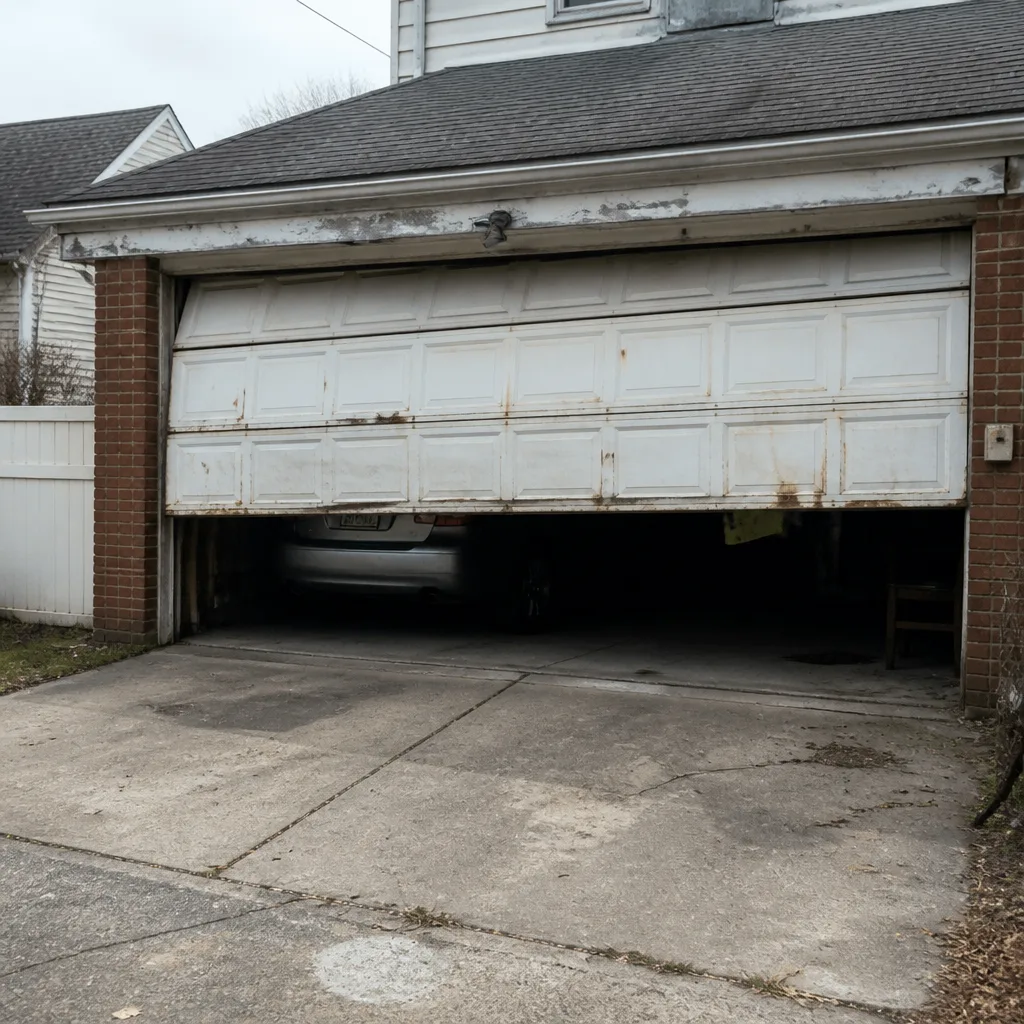 Before
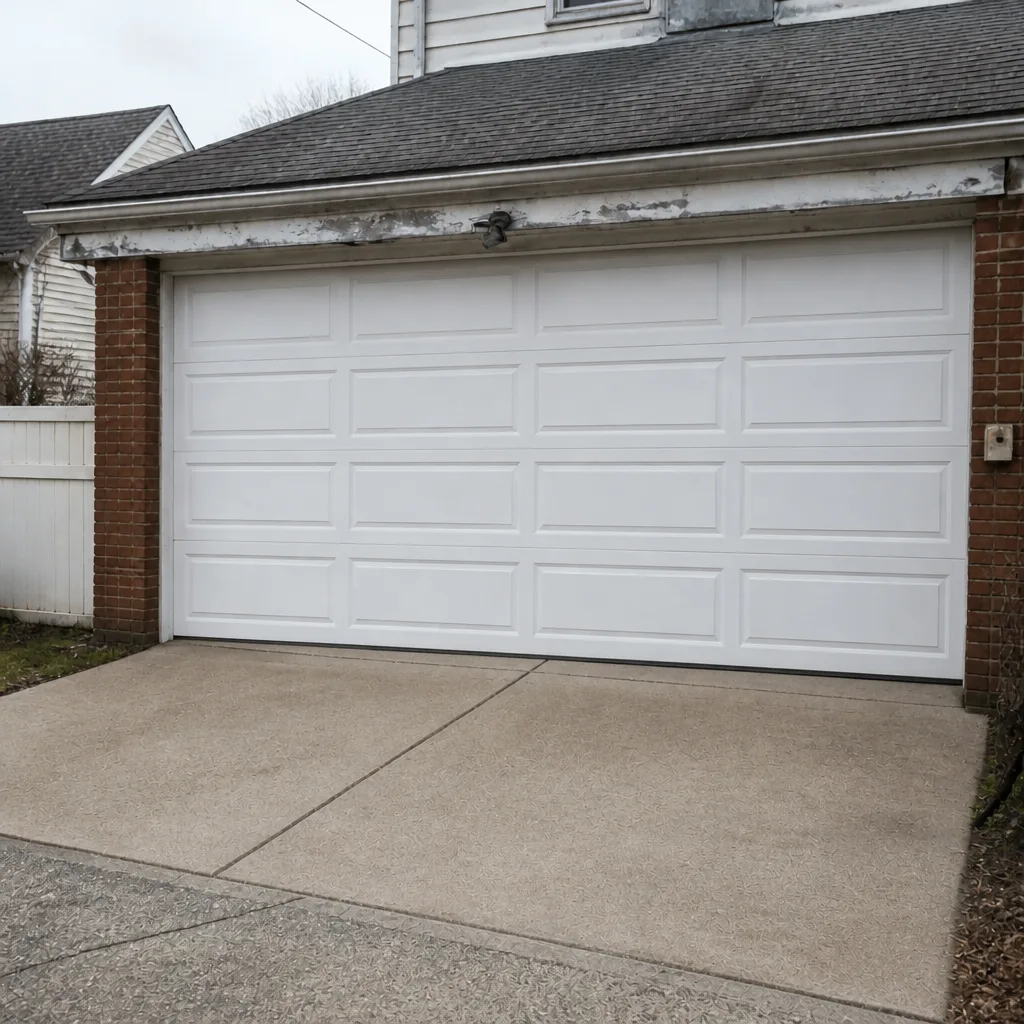 After
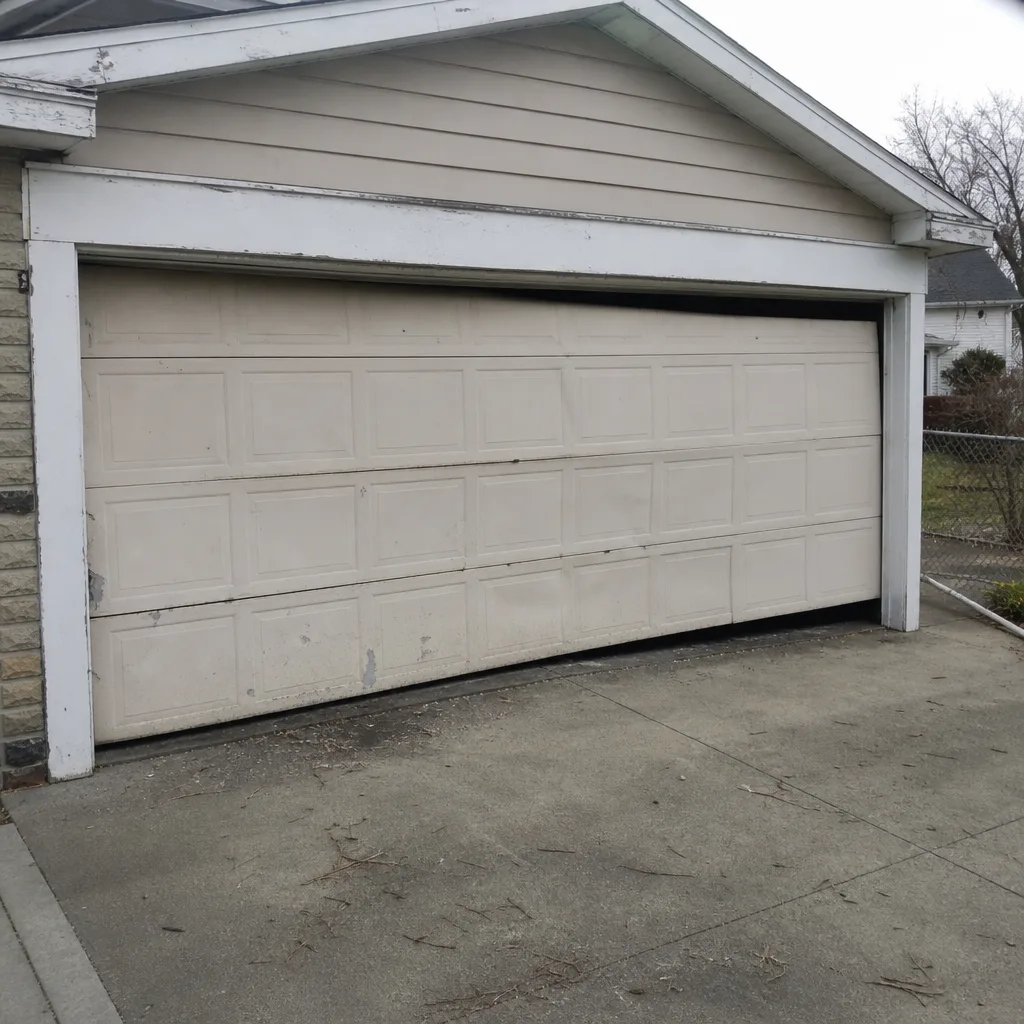 Before
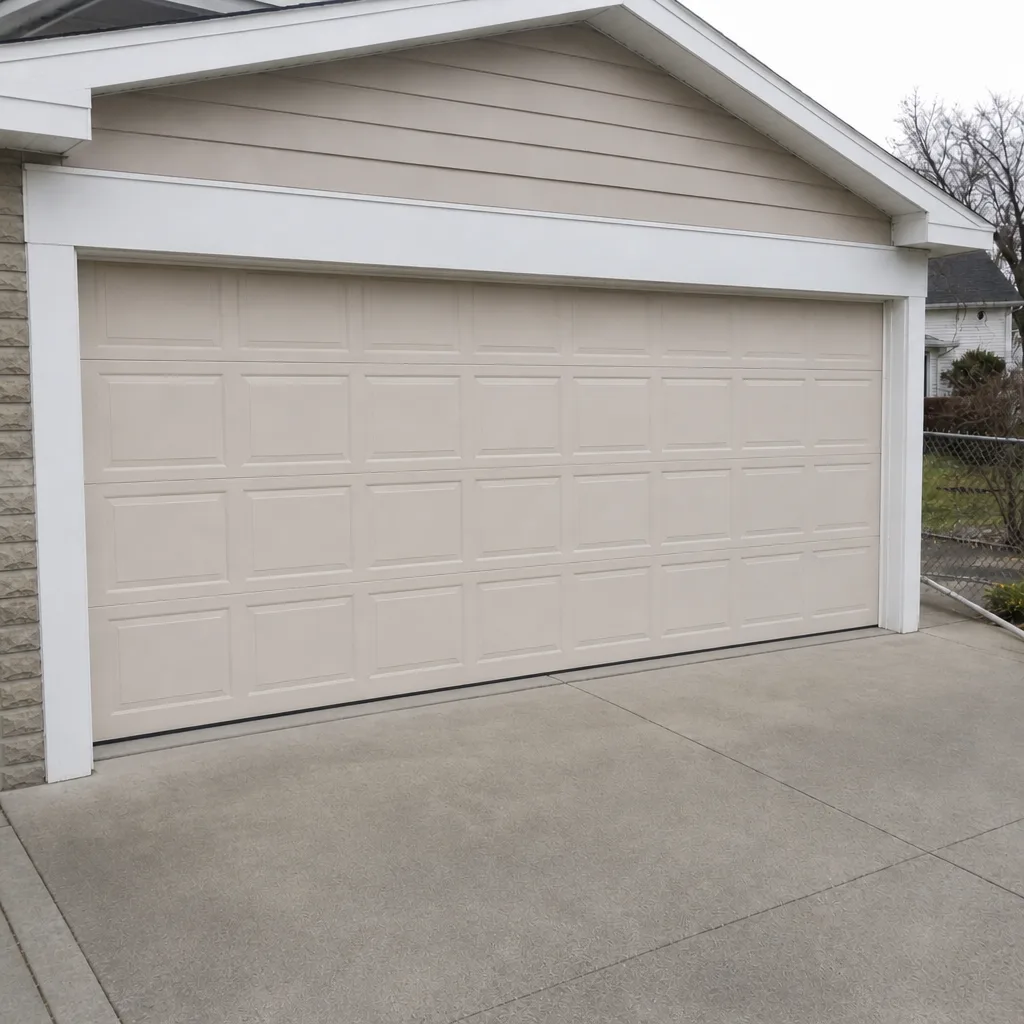 After
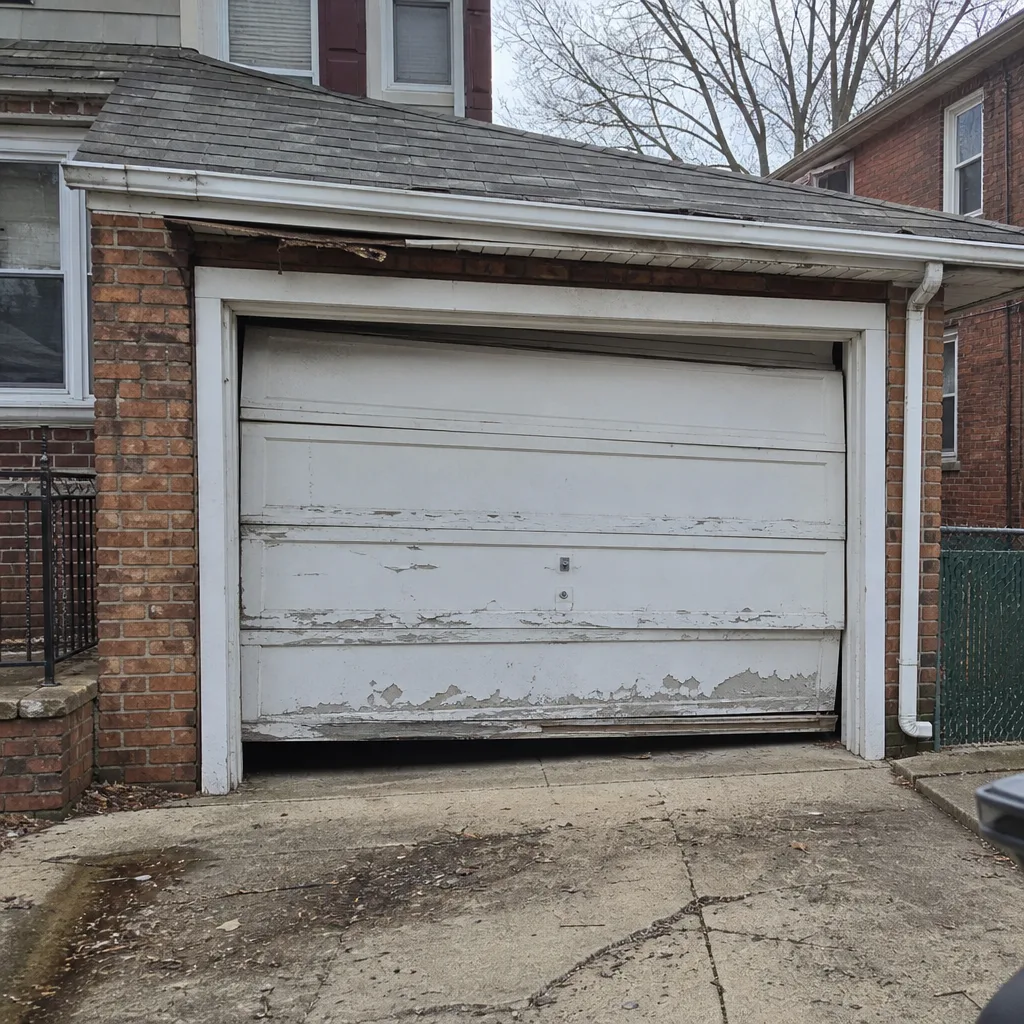 Before
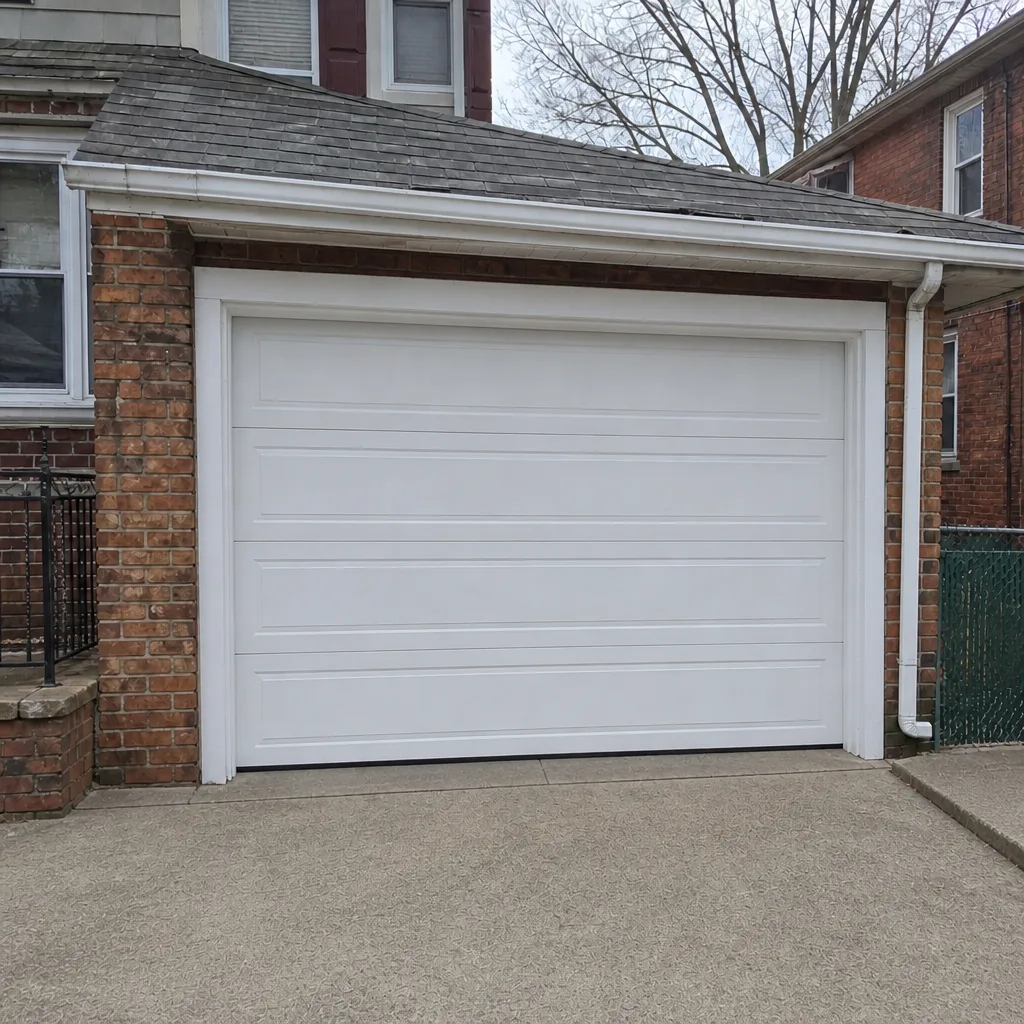 After
When to Call a Professional
Call a professional the moment the door shows any Tier 3 sign above, and definitely before you put the car back in the garage. Grinding, popping, a door that climbs crooked, a cable that looks frayed, a spring that’s lost its lift, or a door stuck open at night all sit in urgent territory. Also call before the next hard freeze if your bottom seal is flattened or daylight-visible, and before the next million cycles if you can’t remember the last time anyone looked at the balance.
We handle garage door repair across the full mechanic: springs, cables, rollers, tracks, openers, sensors, panels. Same-day and emergency service is real, not a promise we attach with an asterisk. Garage Door Repair Fordham offers free estimates in Fordham – call (855) 901-9670. Every job is quoted and agreed before any work starts, so the price on the estimate is the price on the invoice. No surprise there.
Frequently Asked Questions
A door that rises crooked or tilts as it opens is the single most serious warning sign, because it means the torsion spring has lost tension or broken on one side. Pair that with a grinding sound or popping from the torsion bar and you’re in stop-using-the-door territory. Call (855) 901-9670 – estimates are free.
Spring repair in Fordham is typically a per-spring job, and a matched pair is usually replaced together, so a pair costs roughly twice a single spring. The written estimate sets the final price before any work starts. Call (855) 901-9670 for a free estimate and an exact quote for your door.
Yes – a door that won’t close, is stuck open, or is hanging off its tracks falls under our emergency garage door service. Call (855) 901-9670 and we’ll get it moving. Please don’t cycle the door repeatedly while you wait; a stuck door under strain can do more damage with each press.
Not always, and this is the misdiagnosis we see most. Squealing, slapping and slow cycles are usually rollers, hinges or a door that’s out of balance, not the opener. If the door fails the hang test, springs are the fix. If it fails only the cycle and mid-travel checks with a balanced door, the opener is the problem. Either way, one visit tells you which.
No – the price is quoted and agreed before any work starts. If we find something else while we’re on the job, we tell you what it is, what it would cost, and you decide whether to add it. Nothing gets added to the bill without your yes. Call (855) 901-9670.
The local professionals we connect you with are licensed and insured as their state requires, and our technicians have up to 9 years of experience across the brands we work on. We work on LiftMaster, Chamberlain, Genie, Clopay, Amarr, Wayne Dalton, Craftsman and Raynor, so we’re set up for the door you already have, not a replacement push.
Yes, for the safe items. Tightening hinge screws, cleaning sensor lenses, and lubricating rollers and hinges (not tracks) are all reasonable homeowner jobs. Anything involving springs, cables, torsion bars or a door off its tracks is not – those are the parts of a garage door system that can cause serious injury. Call (855) 901-9670 for those.
The Bottom Line
Your garage door tells you what’s wrong before it fails. The grinding in the last few inches is a cable. The crooked climb is a tired spring. The door that reverses only sometimes is a sensor worth looking at today, not next month. The strain you hear in the opener is usually the balance underneath it. Learn those four signals and you’ll stop most emergency calls before they happen. And when a symptom sits in Tier 3, don’t wait for the door to confirm your diagnosis – call (855) 901-9670. Garage Door Repair Fordham handles repair, opener repair, spring repair and full new installation, so one call covers the whole door, whatever brand it happens to be. If you’re planning ahead on a door that’s seen better days, garage door installation starts with a free measure and a written price, and the same team handles it end to end.
Call (855) 901-9670 for a free estimate in Fordham. We’ll come out, listen to what the door is telling you, and give you a written price you agree to before any work starts. That’s the whole arrangement. Garage Door Repair Fordham covers repair, opener repair, springs, installation and emergency service across the brands you already own.
Written by the team at Garage Door Repair Fordham.