Last updated November 21, 2026
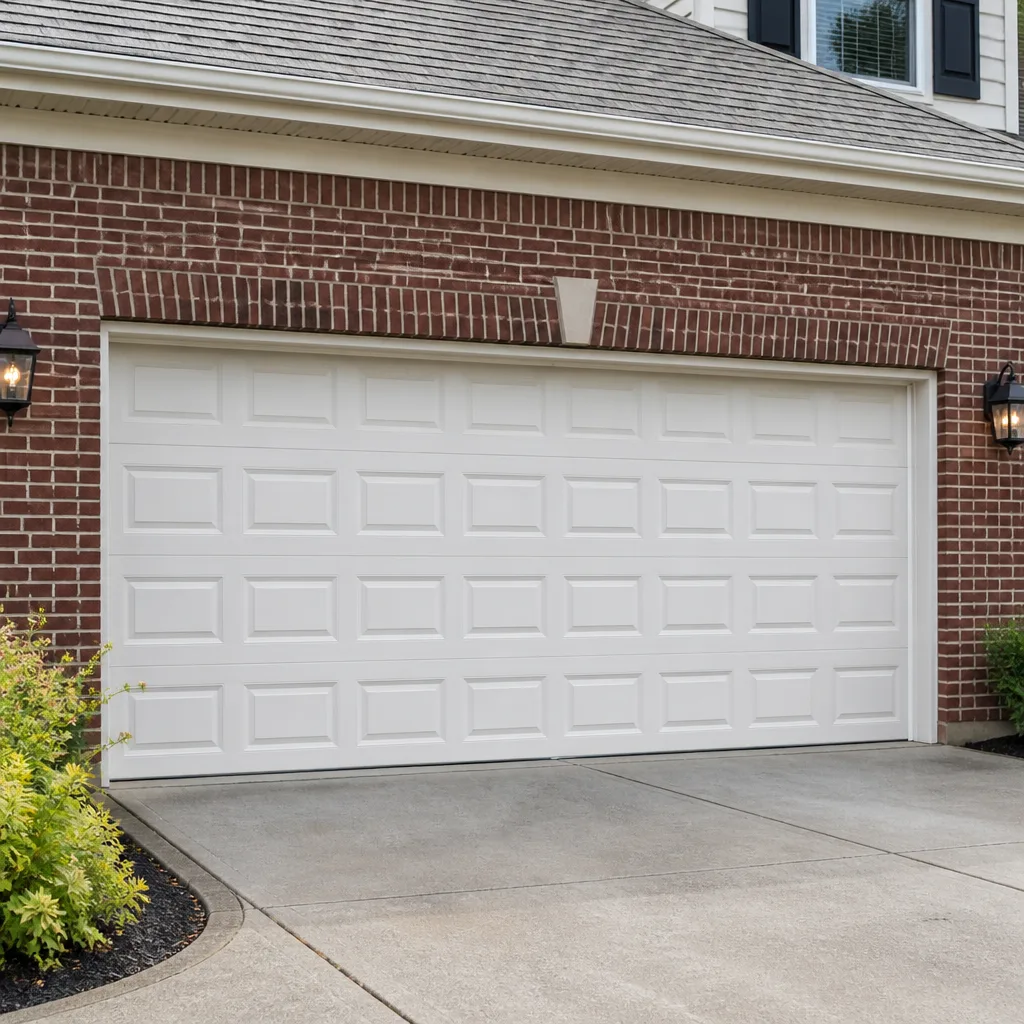 Raised-panel steel
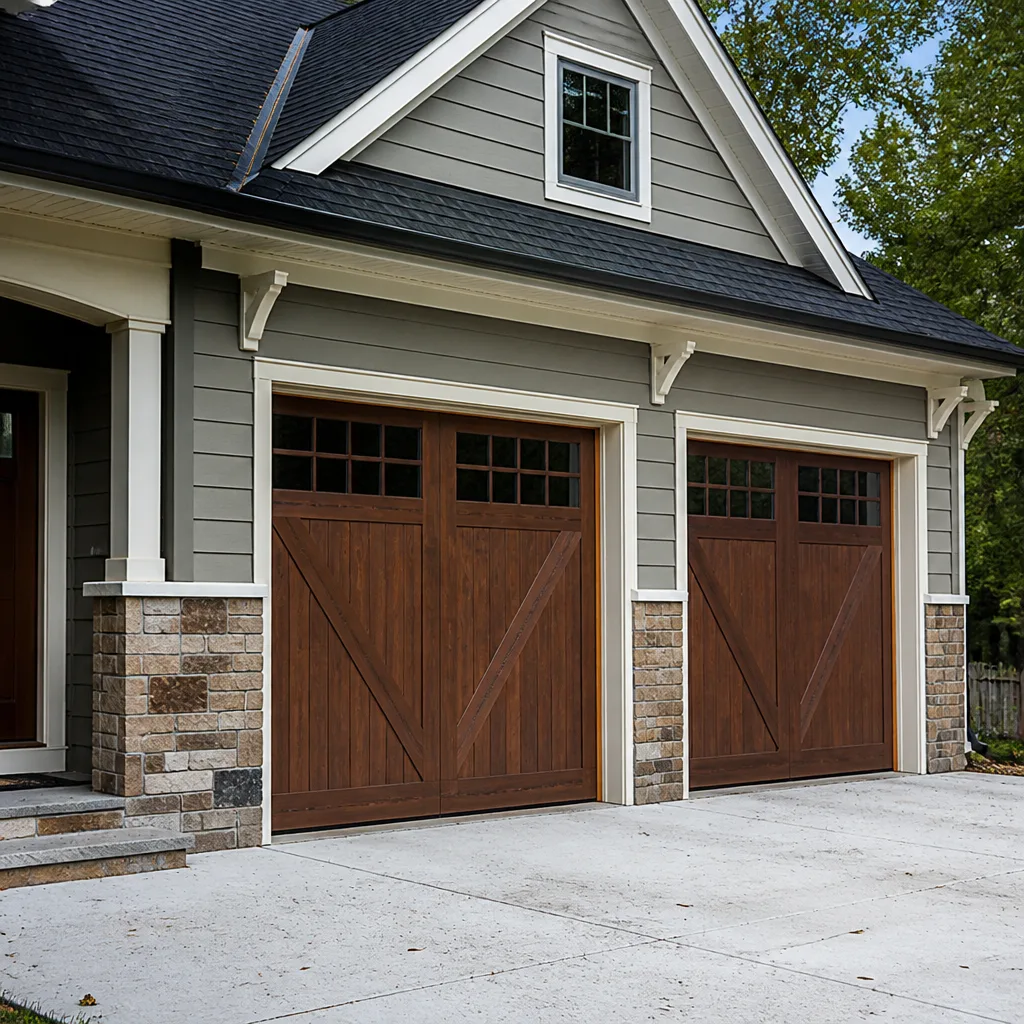 Carriage house
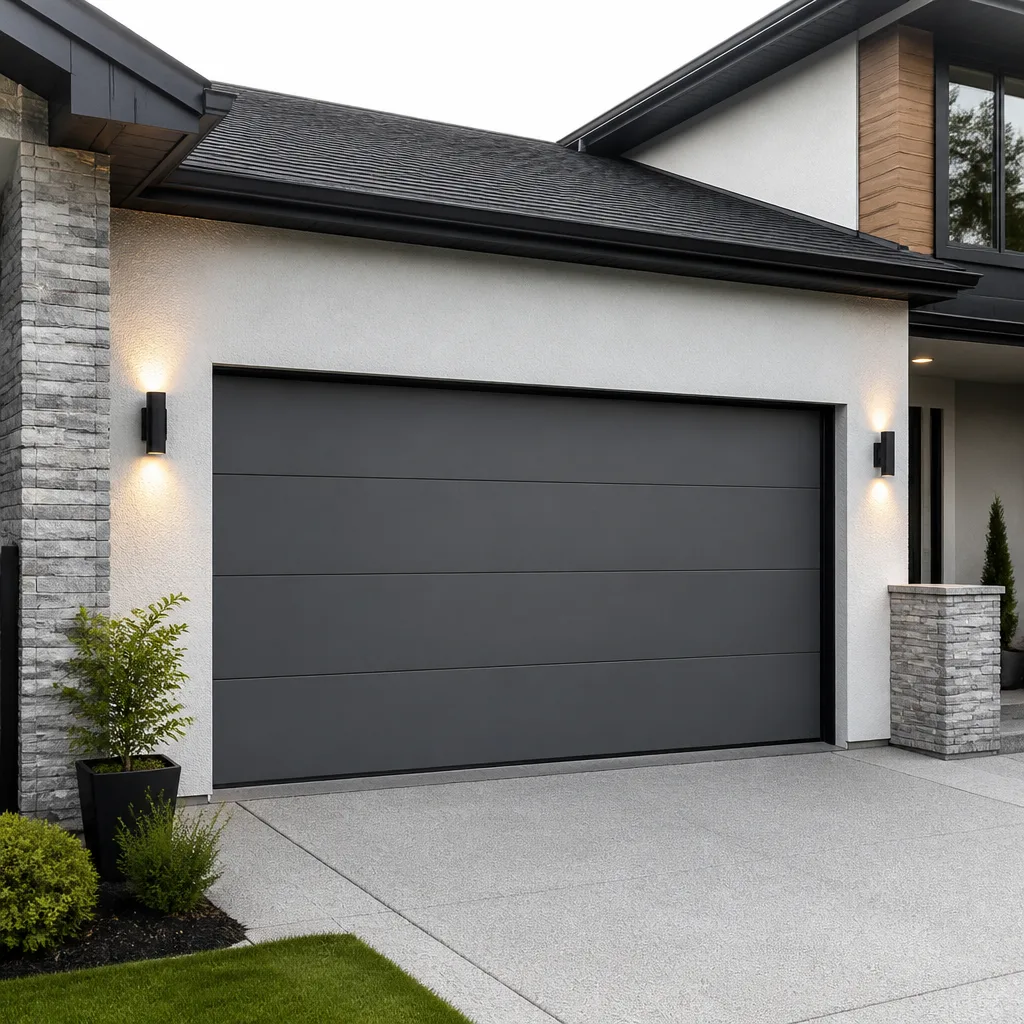 Modern flush
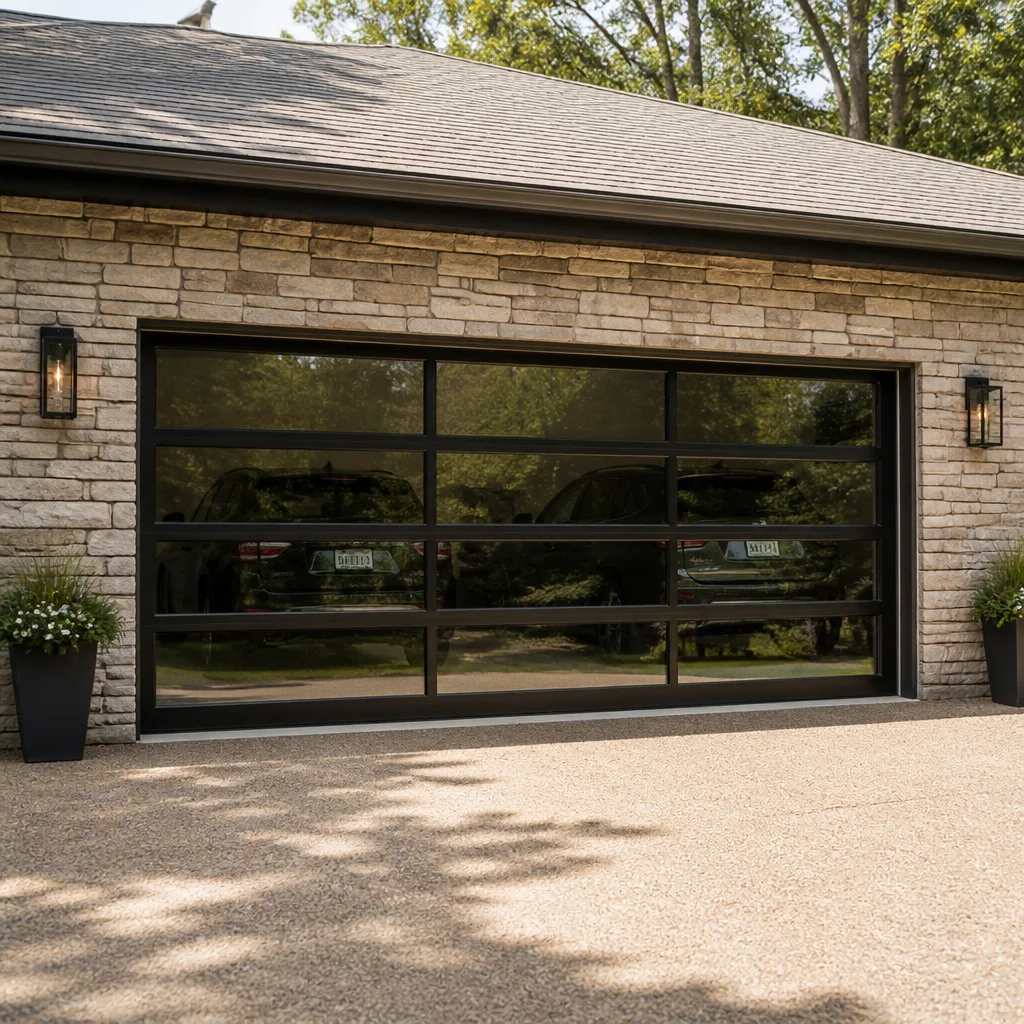 Full-view glass
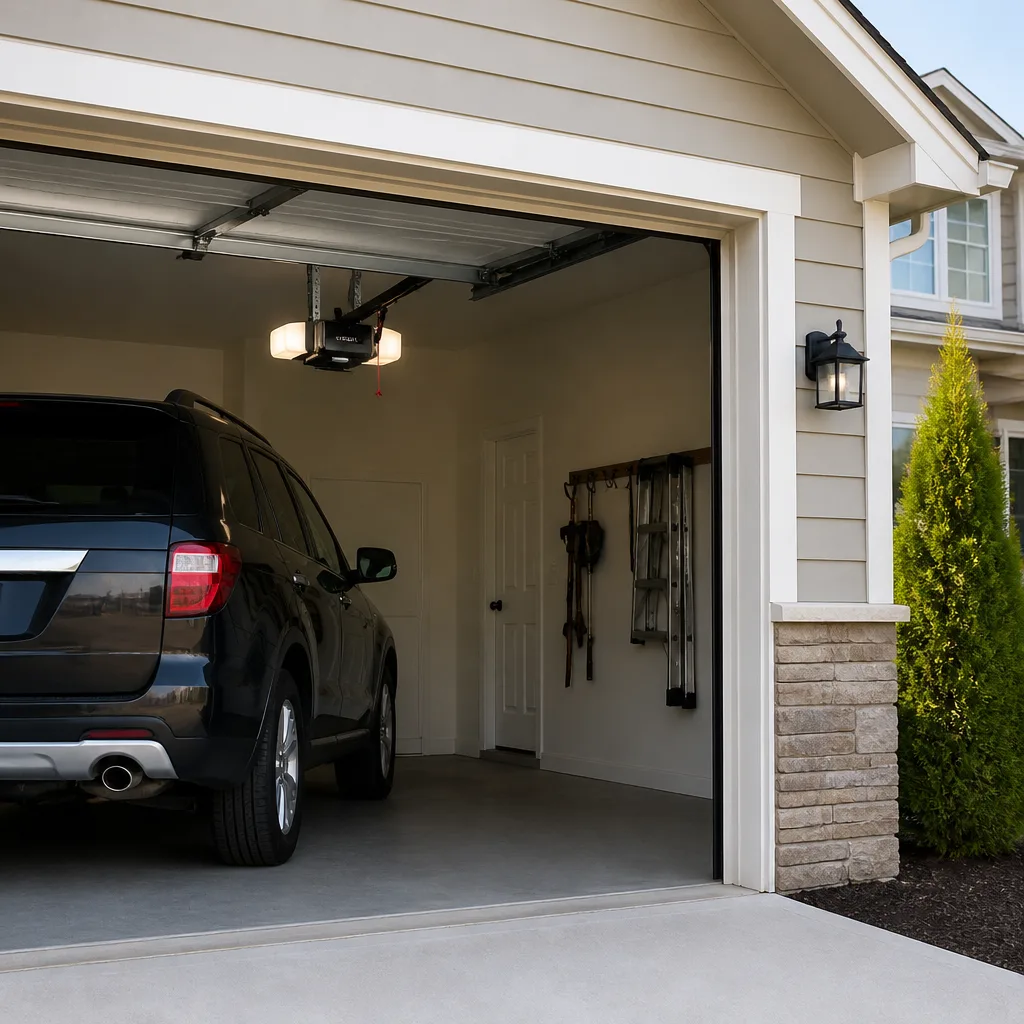 LiftMaster openers
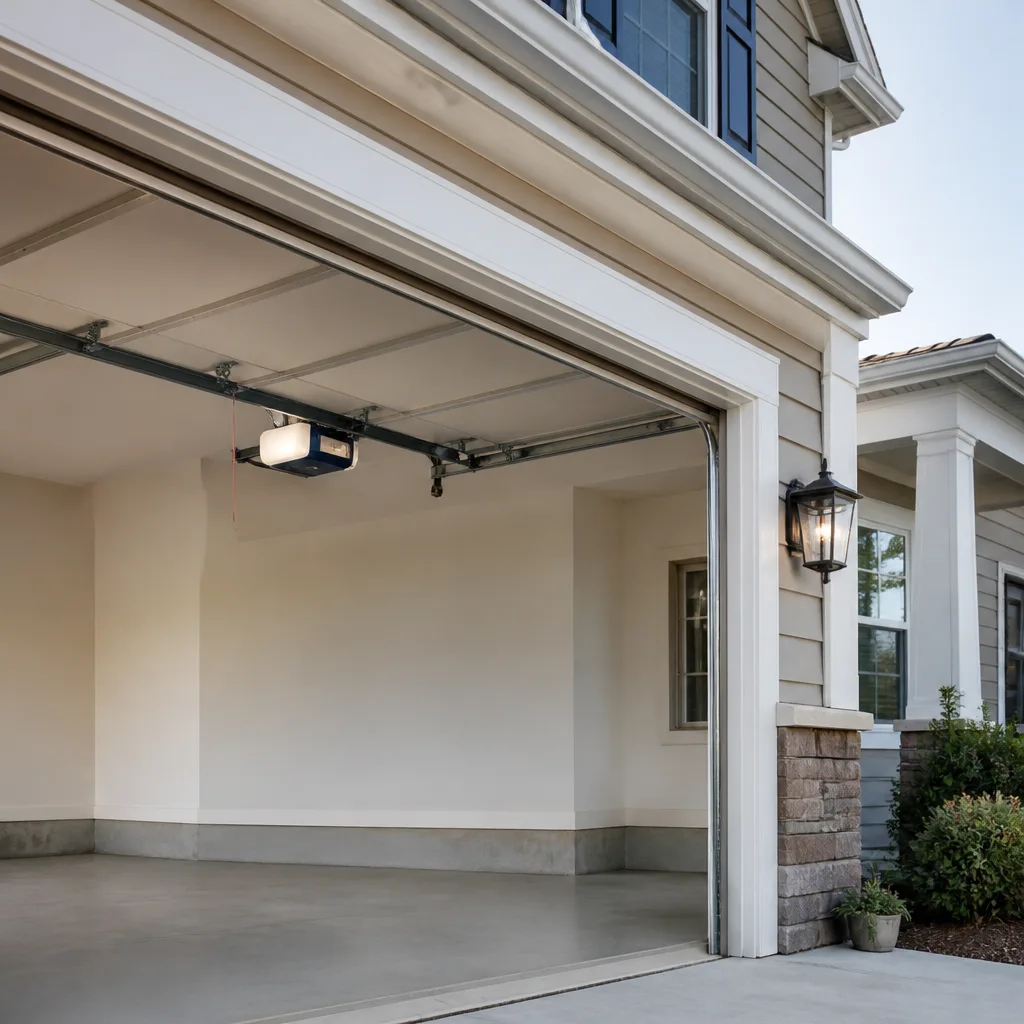 Chamberlain openers
Full 25-point door and opener safety check with every visit - springs, cables, rollers, tracks, and your LiftMaster or Chamberlain opener included
You get a price before we start. It does not change when the pro arrives.
Get your free estimateThe Complete Guide to Garage Doors in Fordham
Most Fordham homes with attached or alley-facing garages were built long before low-headroom track systems became standard, and that single fact changes almost every decision about a garage door here. The door your neighbor just installed may not fit your opening without a hardware swap most contractors forget to mention until the door is already on order. This guide maps what Fordham homeowners and property managers actually face: how pre-war and mid-century construction affects header height and track clearance, which building and co-op rules govern replacement, why alley-facing doors need wind-load ratings even when no permit is triggered, and how to match a new door to an opener you already own. If you want the short version first, keep reading – the Quick Answer below covers the essentials.
Quick Answer
Garage door work in Fordham comes down to three questions: what your opening can physically hold, what your building will approve, and what your existing opener can drive. Most Fordham garages built before the 1970s have lower headers and tighter side clearance than modern doors assume, so measuring before buying is non-negotiable. Repair and spring work is usually straightforward and can often be handled quickly, while replacement and new installation follow a measure, order, and schedule timeline. Call (855) 901-9670 for a free estimate and a written price before any work begins.
Styles & brands we work with
- Raised-panel steel
- Carriage house
- Modern flush
- Full-view glass
- LiftMaster openers
- Chamberlain openers
Table of Contents
- How Fordham’s Housing Stock Shapes Your Garage Door
- Co-op and Rental Building Rules for Garage Door Replacement
- Why Alley-Facing Garages Need Wind-Load Rated Doors
- The Door Types That Realistically Fit Fordham Openings
- Matching a New Door to Your Existing Opener
- Repair or Replace? How to Decide
- What Garage Door Work Typically Costs in Fordham
- Springs, Cables, and the Safety Rules That Matter
How Fordham’s Housing Stock Shapes Your Garage Door
Walk any residential block in Fordham and the construction tells you what to expect inside the garage. The housing mix runs from early 1900s stock through mid-century brick, and both eras predate the standardized 7-foot door opening that modern manufacturers build around. That gap is where most of the friction lives.
Three structural realities show up again and again:
- Header height. Older garages often have a structural header lower than today’s typical clearance, which rules out certain track configurations and full-height panel designs. A standard door dropped into that opening may not open fully, or at all.
- Side and rear clearance. Pre-war alley garages are frequently built tight to the lot line, leaving minimal room for track brackets and torsion hardware. Low-headroom track setups exist precisely for this, but they’re an upgrade, not a default.
- Aging headers themselves. A header that has carried a door for decades may have sagged or shifted. Before specifying a door, a technician needs to confirm the header is sound – otherwise you’re hanging new weight on old structure.
In our experience, this is the single most overlooked step in Fordham garage door projects. Homeowners pick a door online, order it, and discover the opening won’t accept the tracks. The fix isn’t dramatic, but it has to happen before the order, not after. A proper measure accounts for headroom, side room, backroom, and the door’s travel path – not just the width and height of the opening.
Mixed-use buildings add another layer. Where a garage sits under or beside a commercial space, ceiling obstructions, ductwork, or load-bearing elements can limit headroom in ways a residential guide never anticipates. If your garage door repair involves a track or spring failure in a building like this, the space constraints matter as much as the part being fixed.
Co-op and Rental Building Rules for Garage Door Replacement
In Fordham, and across the Bronx, a garage door is often not entirely yours to replace. If you own a co-op unit, rent, or share a building with other residents, approval channels exist and skipping them is the fastest route to a stalled project.
Before ordering anything, work through these steps:
- Check your proprietary lease or building bylaws. Many co-op documents specify whether garage doors are considered building elements or unit elements. That classification determines who approves and who pays.
- Ask the managing agent about alteration agreements. Even a like-for-like door swap may need a simple alteration form on file. It’s paperwork, not a hurdle.
- Confirm appearance rules. Buildings sometimes require a consistent door color or style across all garages visible from the street. A carriage-style door you love may not be permitted if the building standard is a plain raised panel.
- Get contractor documentation in advance. Buildings typically want proof the pro is licensed and insured as their state requires before work begins. The local professional we connect you with carries that documentation.
- Schedule around neighbor access. Alley-facing garages mean shared driveways and shared airspace. A replacement blocks the alley for part of a day, and everyone using it needs notice.
Property managers in Fordham deal with this constantly, and it helps to know the order of operations: approval first, measure second, order third, install last. Rental tenants should route requests through the landlord, since the decision and the payment belong to the property owner. None of this is unusual – it’s just the reality of dense Bronx housing, and it’s why a written plan beats a verbal promise every time.
Why Alley-Facing Garages Need Wind-Load Rated Doors
Here’s a point most guides skip: a garage door facing an open alley or street takes wind load across its full width with nothing to shelter it. In Fordham, where many garages open directly onto alleys and side streets rather than sheltered driveways, that exposure is real.
Wind-load rating isn’t only a permit question. A door rated for wind resistance uses heavier-gauge sections, reinforced struts, or specific track and bracket hardware designed to hold under pressure. Two doors with identical faces can carry wildly different ratings underneath. When a door is unsheltered, the rating is what keeps panels from flexing, binding, or failing in a high-wind event.
What to know before you buy:
- Ask for the wind-load rating in writing. It’s a manufacturer specification, not a sales claim. If it isn’t documented, it isn’t rated.
- Reinforcement matters more on wide doors. An 16-foot-wide door spans more open area than an 8-foot door and needs corresponding reinforcement.
- Unpermitted swaps still carry risk. Some replacements don’t trigger a permit in a given jurisdiction, but the physics don’t care about paperwork. A lighter, cheaper door installed to save money can be the one that fails first.
- Opener load changes too. Heavier reinforced doors need an opener rated for the weight. More on that below.
If you’re unsure what your current door is rated for, that’s a question worth asking before any garage door installation moves forward. It’s also worth checking with your city’s building department on whether your specific replacement needs a permit – requirements vary by scope, and a professional measure will tell you which category you fall into.
The Door Types That Realistically Fit Fordham Openings
Not every door style fits every opening. In Fordham, three categories cover the vast majority of residential garage doors, and each has genuine trade-offs.
Single-layer (uninsulated) doors
A single steel skin with no insulation. Light, affordable, and simple. The catch is temperature: an uninsulated door radiates heat and cold, and in a garage attached to living space, that shows up on your energy bill and in how the room above feels. If your Fordham garage is detached or used only for storage, a single-layer door is a sensible, honest choice.
Insulated doors
Two steel skins with insulation between them. Heavier, quieter, and markedly better at holding temperature. The trade-offs are cost and weight – an insulated door needs an opener rated for the extra load, and its hinges and springs are sized accordingly. For attached garages in Fordham homes where the garage shares a wall with living space, insulated is usually the right call.
Carriage-style doors
The decorative look, with stamped panels, windows, and hardware. Carriage doors come in both single-layer and insulated constructions, so the style doesn’t force the insulation question either way. What it does affect is clearance and weight – decorative overlays and window sections add mass, and some carriage designs need specific track setups. They also run into building appearance rules more often than plain panels, so check co-op or building standards first.
Brand-wise, Clopay and Amarr both build across these categories, and the right answer depends on your opening, not the catalog. A door that fits a neighbor’s garage on a wider lot may not fit yours at all. Measure first, then choose.
Matching a New Door to Your Existing Opener
You can often keep the opener you already have when you replace the door. The question is whether the drive unit is rated for the weight and size of the new door – and whether the safety systems on it still work.
Here’s the decision path:
- Weigh the new door. The manufacturer publishes door weight. Your opener has a rated lifting capacity. If the new door exceeds it, you need a new opener.
- Check the drive type. Belt, chain, screw, and jackshaft drives each suit different doors and clearances. A low-headroom Fordham garage may need a jackshaft or side-mounted opener because there’s no ceiling space for a rail.
- Verify the safety reverse. Every opener should reverse on contact and use a photo-eye safety system. If yours doesn’t, that’s a repair, not an optional upgrade.
- Match the controls. Remotes, wall buttons, and smart-home app control need to be compatible with the opener’s radio system. LiftMaster and Chamberlain units are widely supported, and both offer Wi-Fi and app-enabled models if you want phone control.
This is where a lot of homeowners end up calling twice – once for the door and once for the opener. If your door won’t respond at all, the problem may be the opener rather than the door, and garage door opener repair is the right starting point. One specialist handling both the hardware and the electronics saves you coordinating two vendors who blame each other’s work.
If your current opener is a Genie or a Craftsman unit, it can usually be serviced rather than replaced. Replacing a functioning opener simply because the door changed is unnecessary spending, and a technician who checks compatibility first will tell you honestly which way to go.
Repair or Replace? How to Decide
Most garage door problems are repairs, not replacements. The door itself is a long-lived component, and the parts that fail – springs, cables, rollers, hinges, openers – are designed to be serviced. Here’s how to think about it.
Repair makes sense when:
- A spring has broken but the door panels, tracks, and opener are sound.
- The door won’t respond and the cause is a dead opener, a misaligned sensor, or a remote that needs re-pairing.
- Rollers, hinges, or cables have worn and the door otherwise moves smoothly.
- The door is dented in one section and that section can be replaced on its own.
Replacement makes more sense when:
- Multiple panels are dented, rusted through, or separating.
- The door is so heavy or out of balance that the opener and springs are being asked to do work they weren’t designed for.
- You want insulation and the existing door is uninsulated, or the style doesn’t fit the building.
- The door is unsafe – a broken spring, a frayed cable, or a door that free-falls when released.
Honest diagnosis is the whole game here. A door that just needs a spring shouldn’t become a replacement conversation, and a door that’s structurally failing shouldn’t be patched indefinitely. For the full range of repairs, our Garage Door Repair Fordham service is the place to start.
What Garage Door Work Typically Costs in Fordham
Costs below are typical estimates for the Fordham market, not fixed prices. The written estimate you receive after a measure sets the final price, and that price is quoted and agreed before any work starts.
| Job | Typical estimate | Notes |
|---|---|---|
| Spring repair (one spring) | Quoted per spring; a matched pair costs about twice | Most doors use two springs and both are usually replaced together |
| Opener repair | Quoted per job after diagnosis | Often a sensor, remote, or control-board issue |
| Roller, hinge, or cable replacement | Quoted per job | Depends on how many parts are worn |
| Single-layer door replacement | Quoted after measure and order | Lightest and least expensive door category |
| Insulated door replacement | Quoted after measure and order | Heavier door; may need a new opener |
| Carriage-style door replacement | Quoted after measure and order | Style and weight vary widely |
A few things drive the number up or down in Fordham specifically. Tight alley access can add labor time. Low-headroom track work adds hardware. A sagging header that needs attention before the door goes on adds structural work. And a door that requires a new opener because the old one can’t lift it changes the total. The estimate should break these out clearly, not bury them in one figure.
On the question of surprise invoices: the price agreed before work starts is the price, and if something changes mid-job – a hidden issue, an additional failed part – you get told and you agree before it’s done. That’s the standard a written estimate works from. Call (855) 901-9670 for a free estimate.
Springs, Cables, and the Safety Rules That Matter
Springs are the most dangerous part of any garage door, and this is the one section where we tell you plainly: don’t touch them. Torsion springs and the cables attached to them store an enormous amount of energy. When a spring breaks or a cable snaps, the stored energy releases at once, and the components involved can cause serious injury. Extension springs have the same problem in a different arrangement.
What you can safely check yourself:
- Listen for the sound of a break. A loud bang from the garage, followed by a door that won’t open or is too heavy to lift, usually means a spring has failed.
- Look for gaps in the spring. A torsion spring with a visible gap has broken. Don’t try to open the door with an opener – the opener is now lifting dead weight.
- Watch for frayed or slack cables. Any cable not under tension or visibly damaged is a stop, not a repair-it-yourself.
- Test the safety reverse. Place a small object in the door’s path and close it. The door should reverse. If it doesn’t, stop and call.
- Keep the door closed if it’s unsafe. A door that’s off its track or hanging can fall. Secure access and call for help.
Spring and cable work belongs to trained technicians, and in Fordham that means an emergency call if the door is stuck open or won’t close at night. For an emergency, call us and we’ll get someone moving – not triaged into a callback queue. For scheduled spring service, we handle the repair in-house, so there’s no parts-order delay and no handoff. And if you need work outside the usual day, we can book early mornings or Sundays; we’re closed on Saturdays.
Common Mistakes to Avoid
- Ordering a door before measuring. The opening, headroom, and side clearance decide which door will fit. Ordering from a catalog without a measure is how Fordham garage door projects stall.
- Assuming the neighbor’s door will fit yours. Housing stock varies block by block in Fordham, and a low header or tight side room can rule out a design that worked next door.
- Skipping the building approval step. Co-op and rental rules can hold up an otherwise simple replacement. Check your lease or bylaws before you spend.
- Buying a heavier insulated door without checking the opener. The best-looking door in the catalog is useless if your existing opener can’t lift it.
- Ignoring the wind-load rating on an alley-facing garage. A cheap unrated door across an open alley is a risk, not a saving.
- Trying to fix a spring yourself. Springs store lethal energy. This is the one part of the system that always goes to a trained technician.
- Calling two vendors for the door and the opener separately. Fragmented vendors create finger-pointing. One specialist diagnoses both systems together.
See the difference
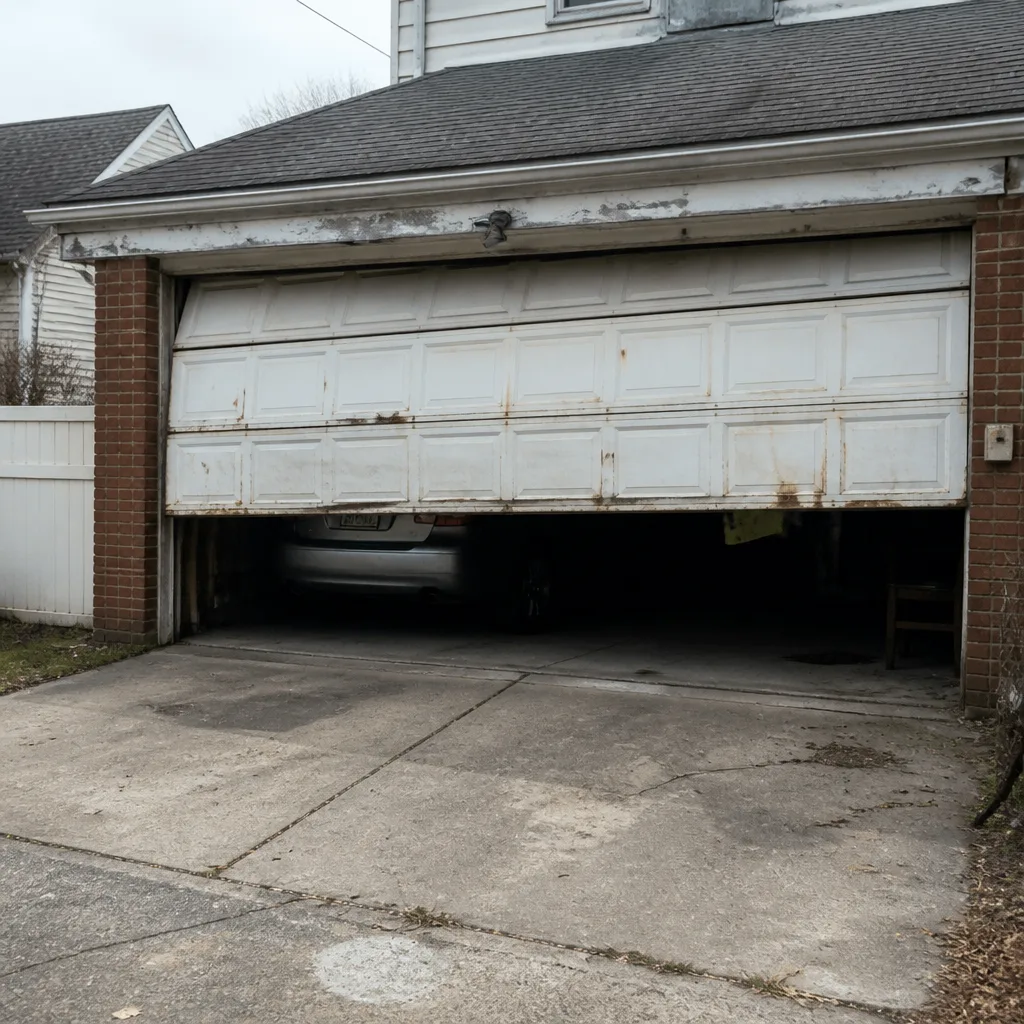 Before
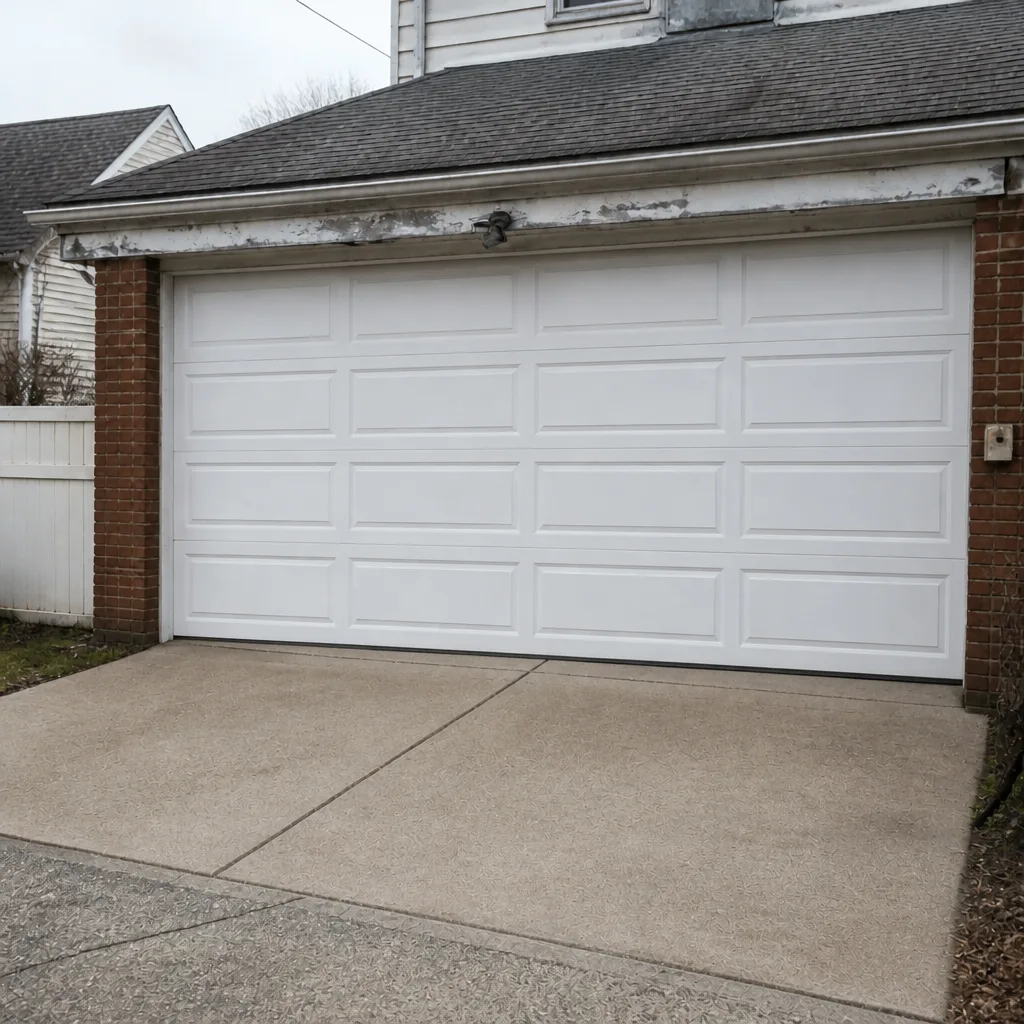 After
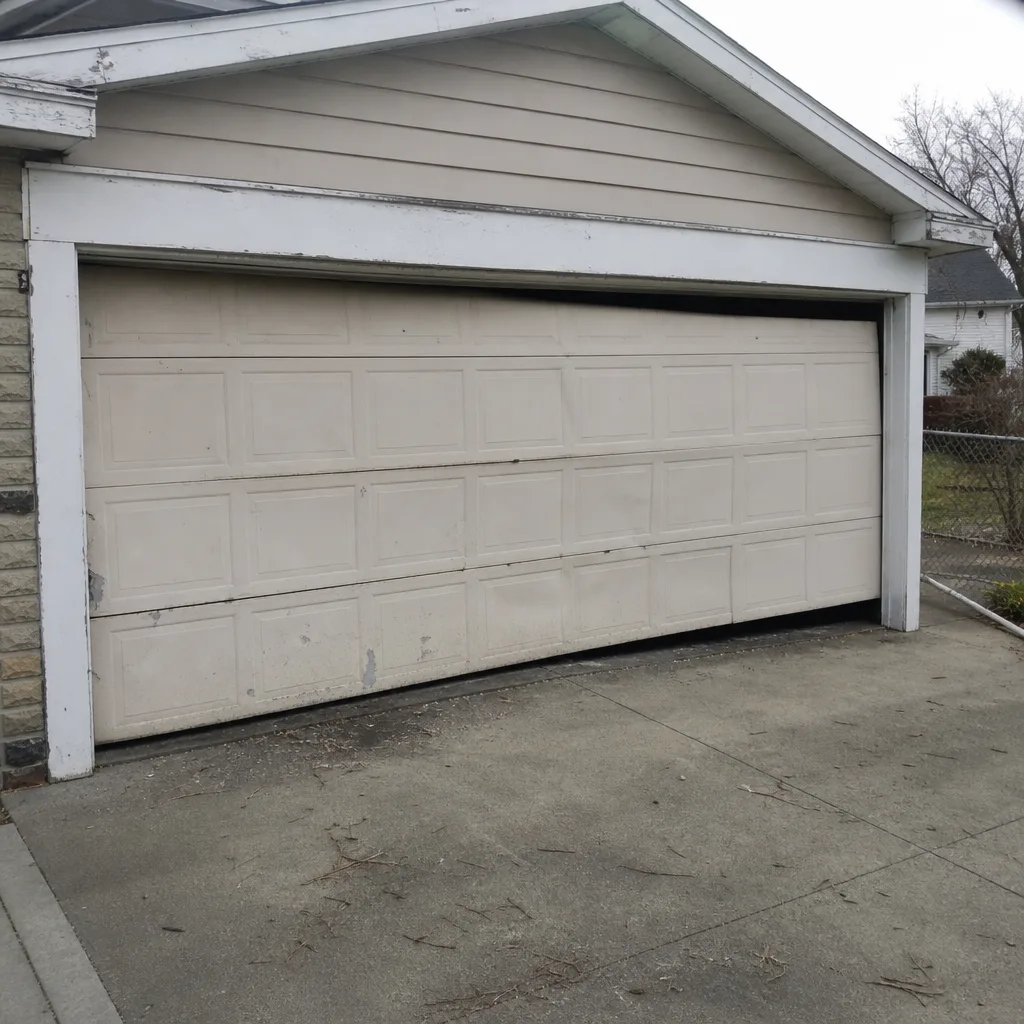 Before
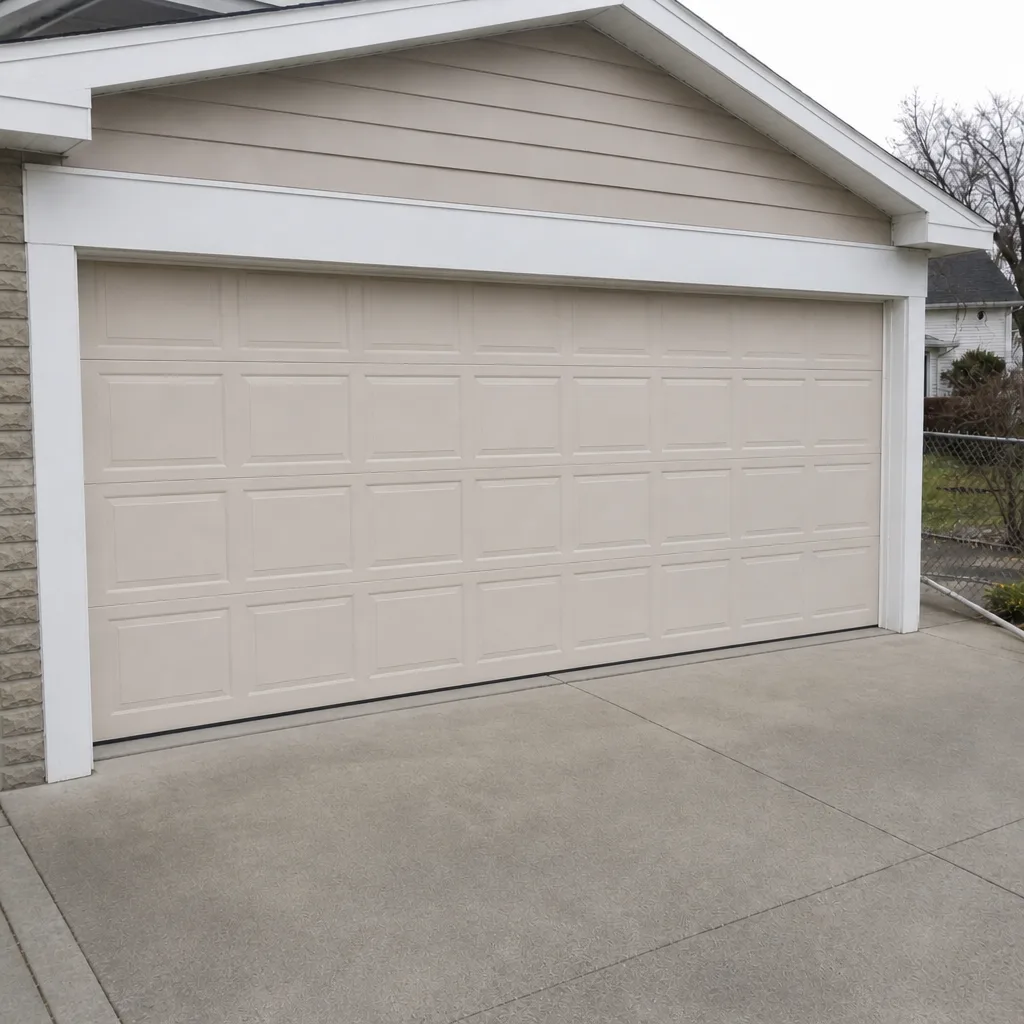 After
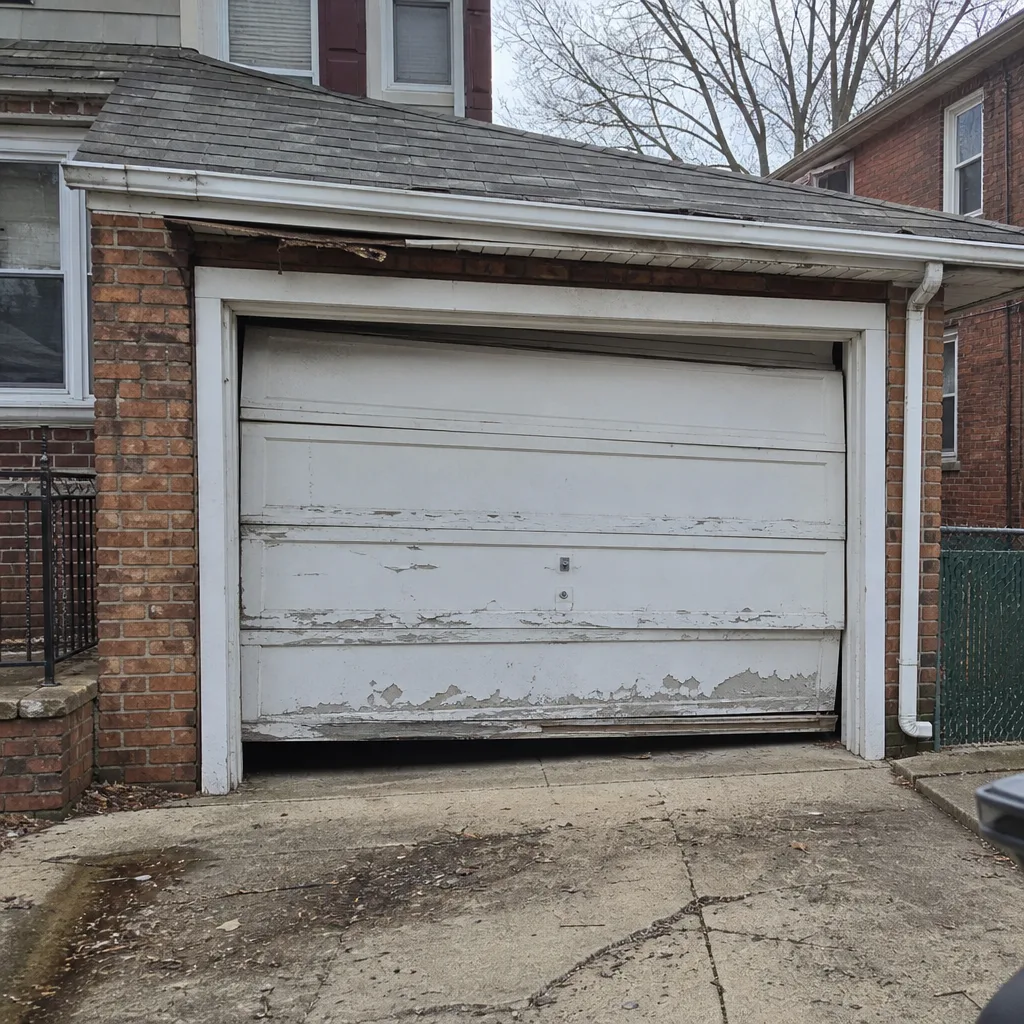 Before
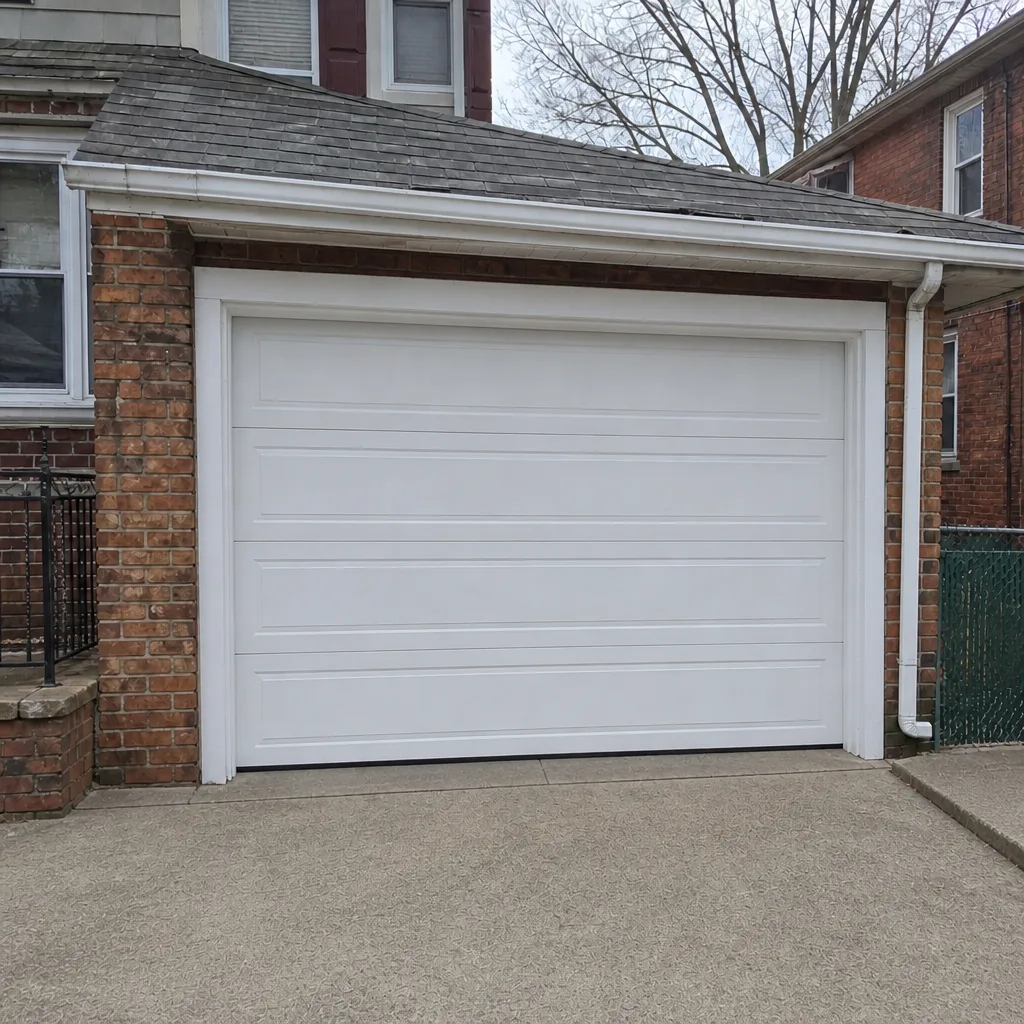 After
When to Call a Professional
Call a professional if a spring has broken, a cable is frayed or slack, the door won’t open or close, the door falls or slams rather than lowering smoothly, or the opener runs but nothing moves. Call if the door is off its track, if a panel is separating, or if you’re considering a replacement and want the opening measured to avoid ordering a door that won’t fit. Emergency situations – a door stuck open overnight, a garage that won’t secure – deserve an immediate call rather than a scheduled appointment, and we offer dedicated emergency service for exactly that. Garage Door Repair Fordham offers free estimates in Fordham. Call (855) 901-9670, and the price is quoted and agreed before any work starts.
Frequently Asked Questions
Spring repair is quoted per spring, and because most doors use two springs replaced together as a matched pair, a pair costs about twice the price of one. The exact figure depends on the spring size and the door. Call (855) 901-9670 for an exact quote – estimates are free.
Yes, if the issue is a repair or an emergency. Our emergency service handles stuck-open and won’t-close situations as live jobs, not callback requests. Call (855) 901-9670 and we’ll get someone moving.
No. The written estimate quotes and agrees the price before any work starts. If a hidden issue turns up mid-job – a failed part you didn’t know about, a header that needs attention – we tell you and you agree before anything extra is done. Call (855) 901-9670 for a free estimate.
The local professionals we connect you with are licensed and insured as their state requires. Our technicians have up to 9 years of experience across doors and openers, and we work on the brands you already have – LiftMaster, Chamberlain, Genie, Clopay, Amarr, Wayne Dalton, Craftsman, and Raynor. Call (855) 901-9670 for a free estimate.
Often, yes – if your existing opener’s lifting capacity matches the weight of the new door. A heavier insulated door may exceed the old opener’s rating, in which case a new one is needed. Checking compatibility first avoids unnecessary spending. Call (855) 901-9670 for a free measure.
Permit requirements vary by the scope of the work, so the honest answer is to ask your city’s building department before you order. We can tell you what the measure reveals about your opening and whether structural work is involved; the city tells you whether a permit is required for that work. Call (855) 901-9670 for a free estimate.
The Bottom Line
Garage doors in Fordham demand more planning than the catalog suggests. Pre-war and mid-century construction means header height, track clearance, and side room decide what will fit, and building rules can decide what you’re allowed to install. Alley-facing garages should carry wind-load ratings even when no permit is triggered. Repair is usually the right call and replacement the exception. Springs and cables are dangerous and belong to trained technicians. Measure before you order, check the opener against the new door’s weight, and get the price in writing before work starts. Call (855) 901-9670 for a free estimate.
Written by the team at Garage Door Repair Fordham.